Renaissance Villa for Sale in Florence | Historic Complex with Lemon House and Private Garden | Ponte a Mensola
€5,600,000
1174 m²
R133
View Location
More info
Area Guide
Similar properties
A Residence in the History of Florence
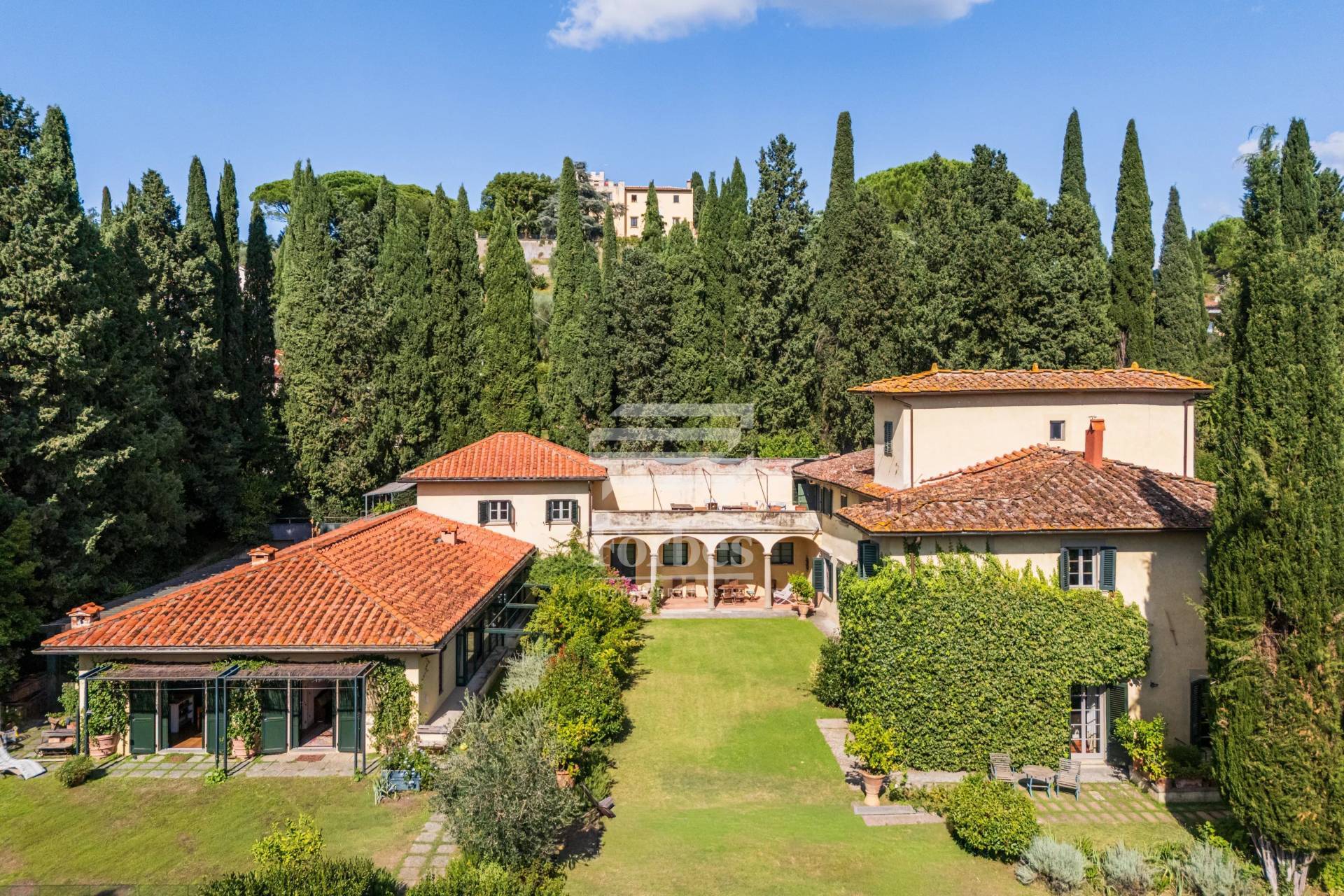
In the heart of Ponte a Mensola, between the municipalities of Florence and Fiesole, stands an enchanting typically Tuscan residence in the Florentine real estate scene, a fourteenth-century villa that has traversed centuries of history, hosting internationally prominent personalities and preserving its most authentic soul.
Cited in the volume The Villas of Florence by Giulio Lensi Orlandi, the property gained particular notoriety in the nineteenth century when it was purchased by British spouses Henry James and Janet Ross, promoters of Anglo-Saxon cultural life in Florence, founders of the British Institute, and distinguished visitors of Bernard Berenson — the famous art critic who gathered the European intellectual elite at Villa I Tatti nearby, now the Harvard University headquarters. Neighbors of Temple Leader, the English aristocrat who restored Vincigliata Castle, the Rosses transformed this property into a vibrant center of the British community, cultivating oil and wine on a vast estate extending from Poggio Gherardo to Via D'Annunzio.
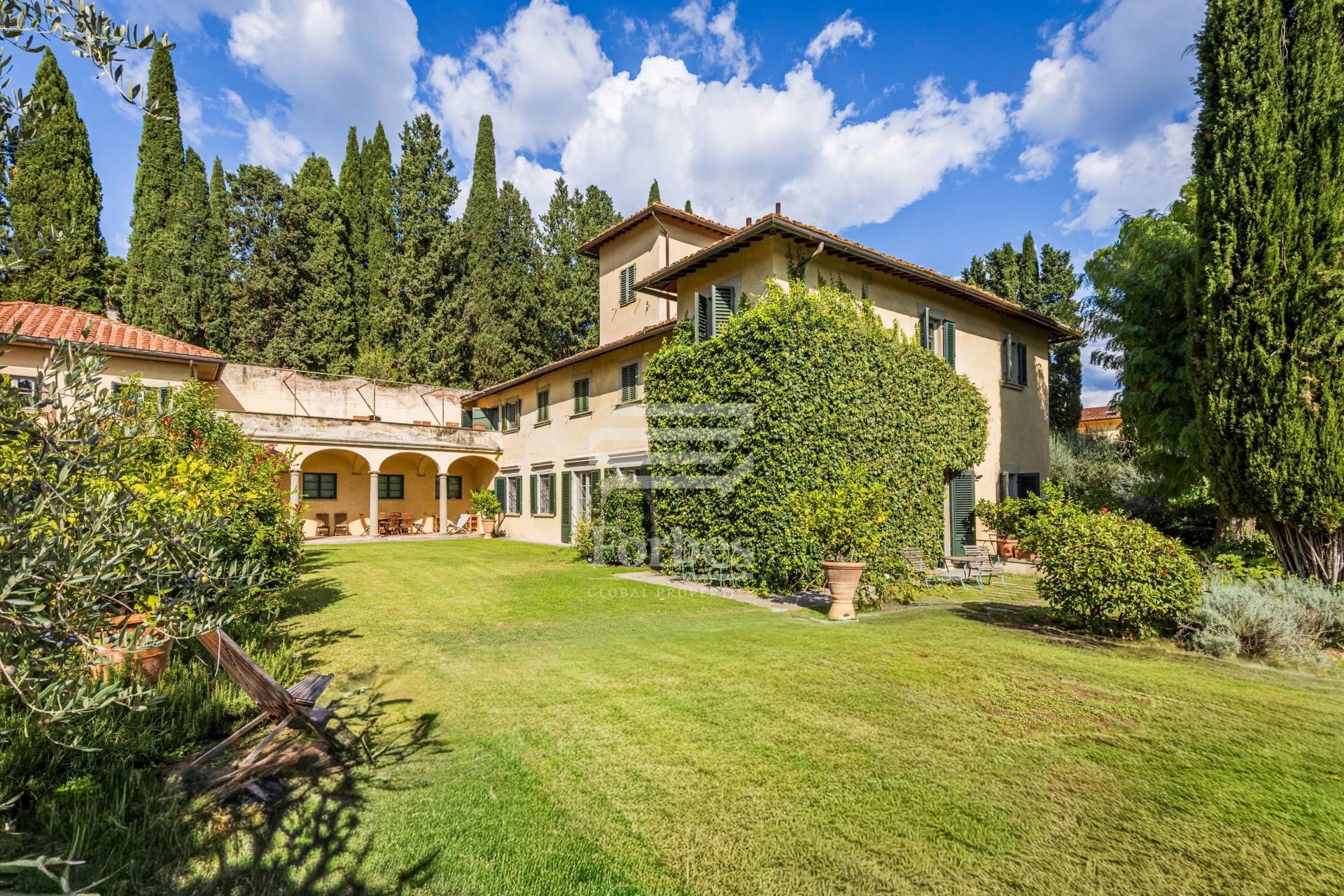
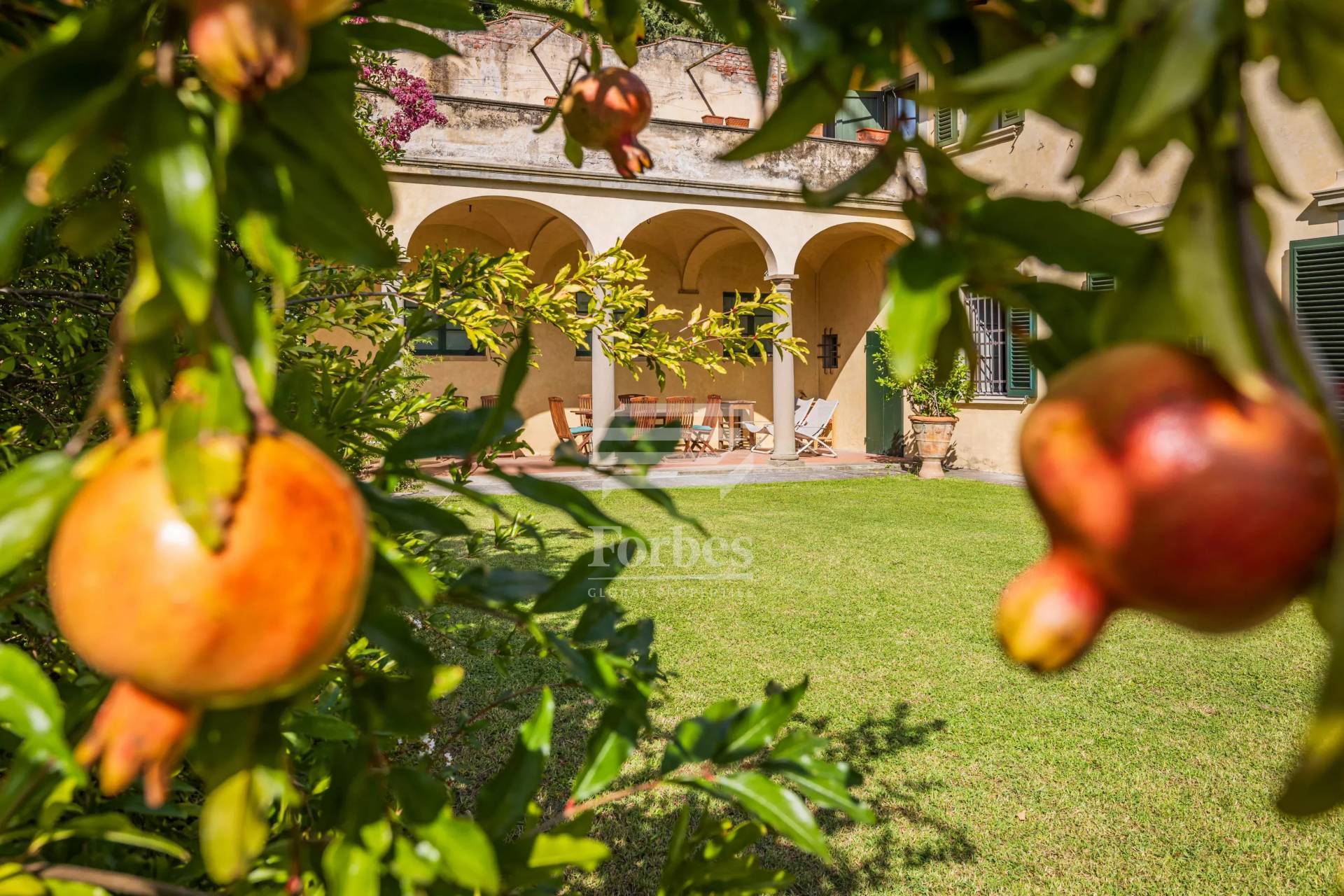
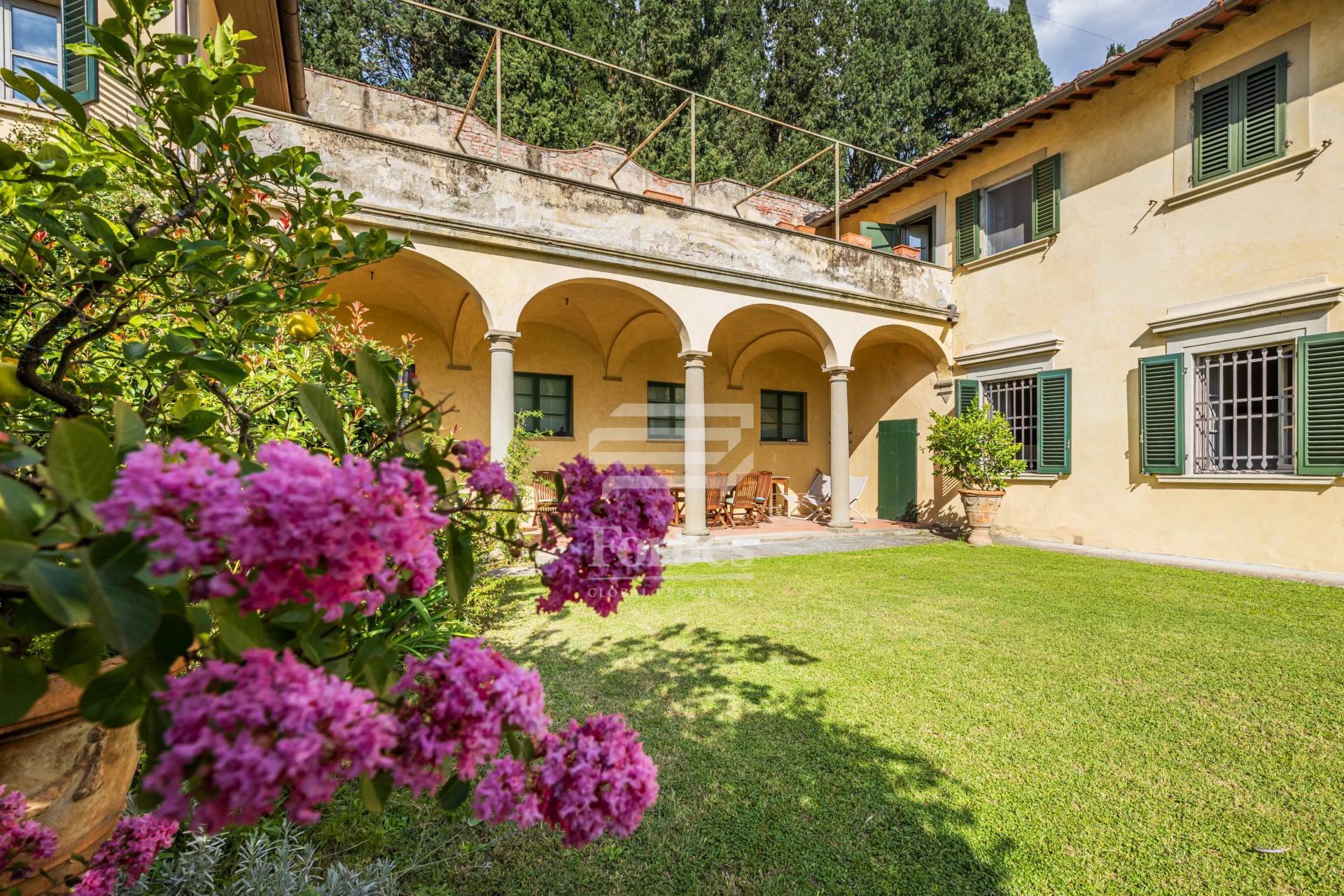
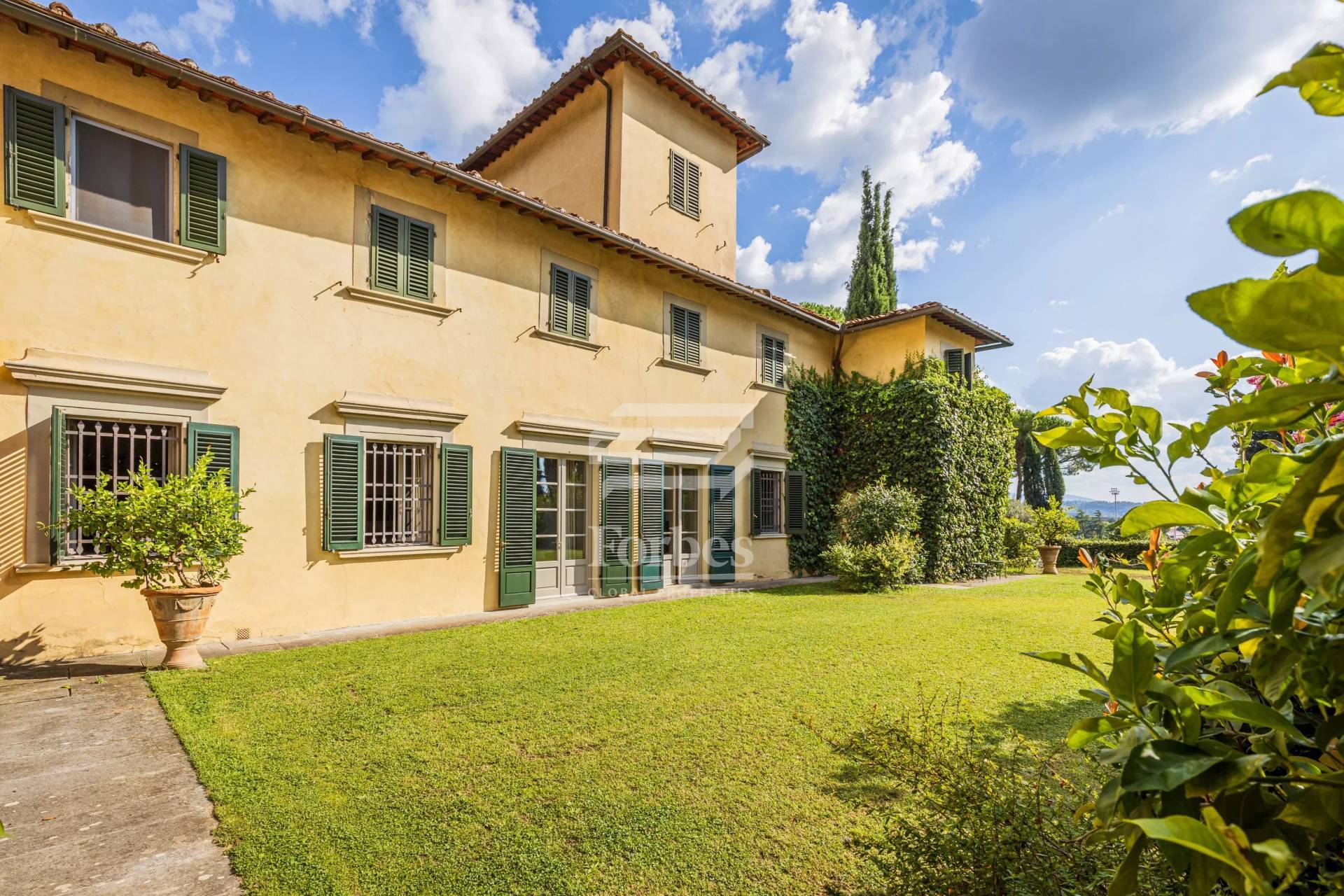
After World War II, Lord Acton bought the villa for his daughter, whose husband, an architect, carried out a restoration that revealed ancient walls, windows with Tuscan wooden shutters framed by pietra serena, coffered ceilings, and expanded the loggia in the form we can still admire today. In the 1990s, architect Guido L. Spadolini, husband of the current owner, completed the complex with the construction of a lemon house, inserted into the garden with refined architectural sensitivity.
The property today
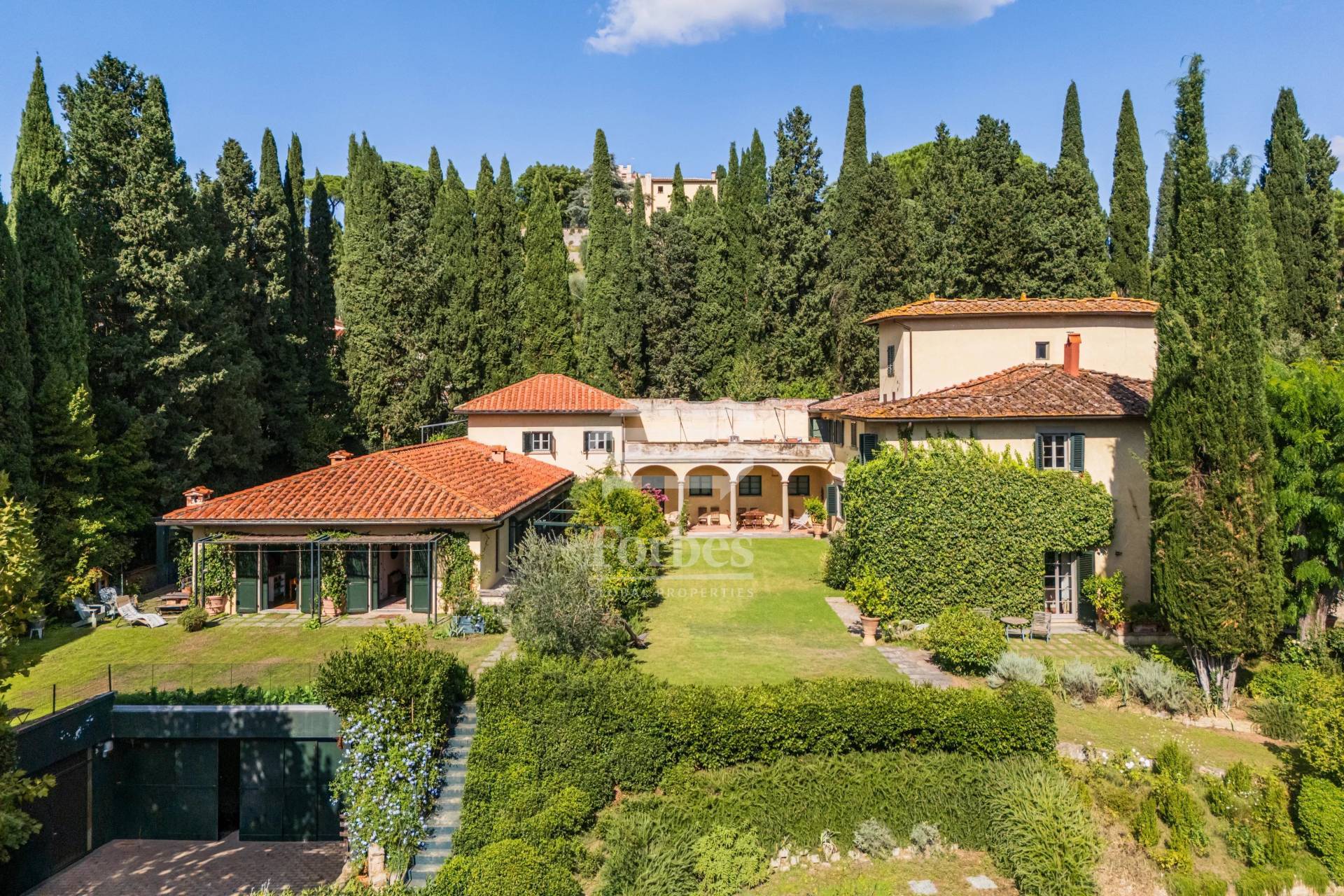
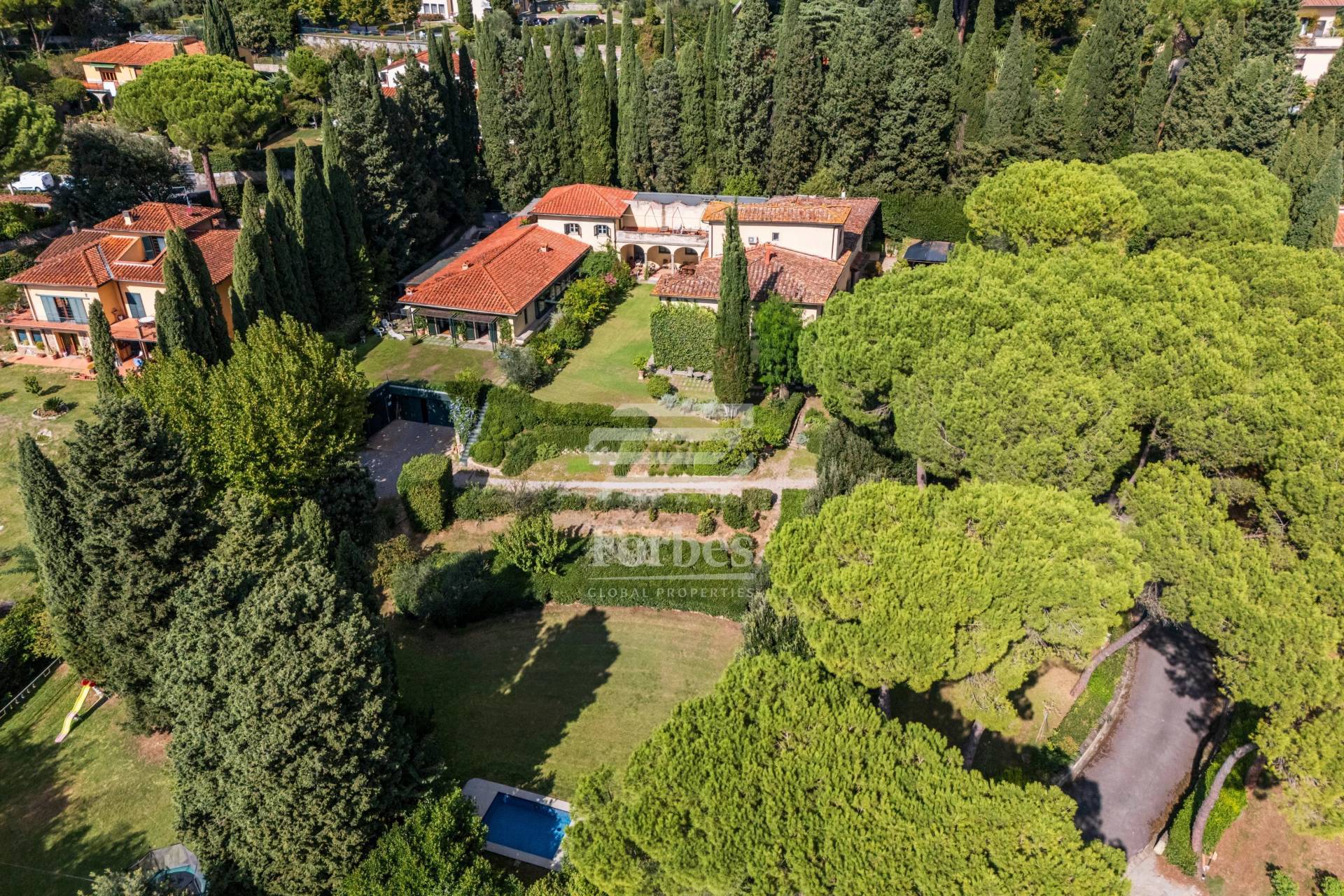
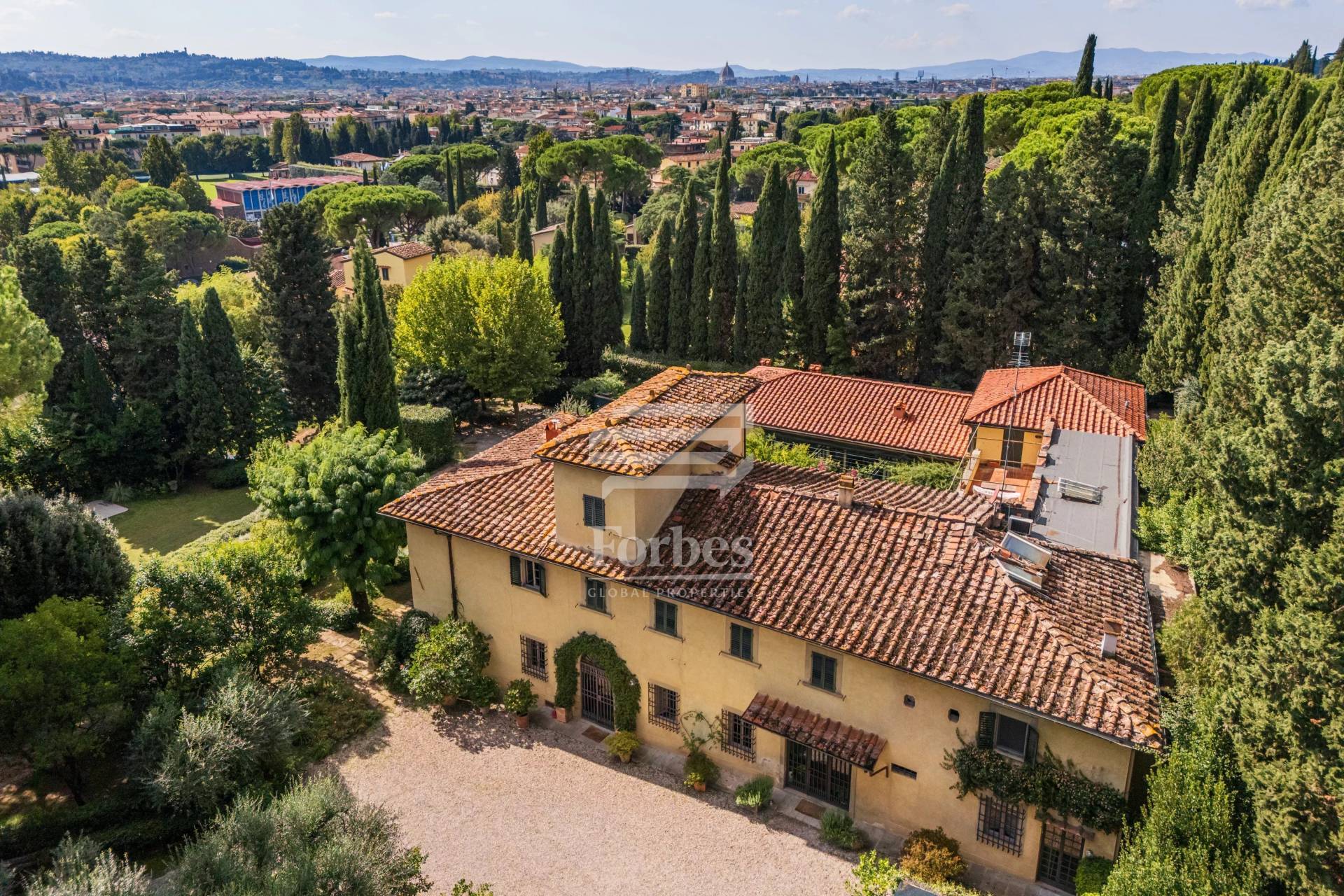
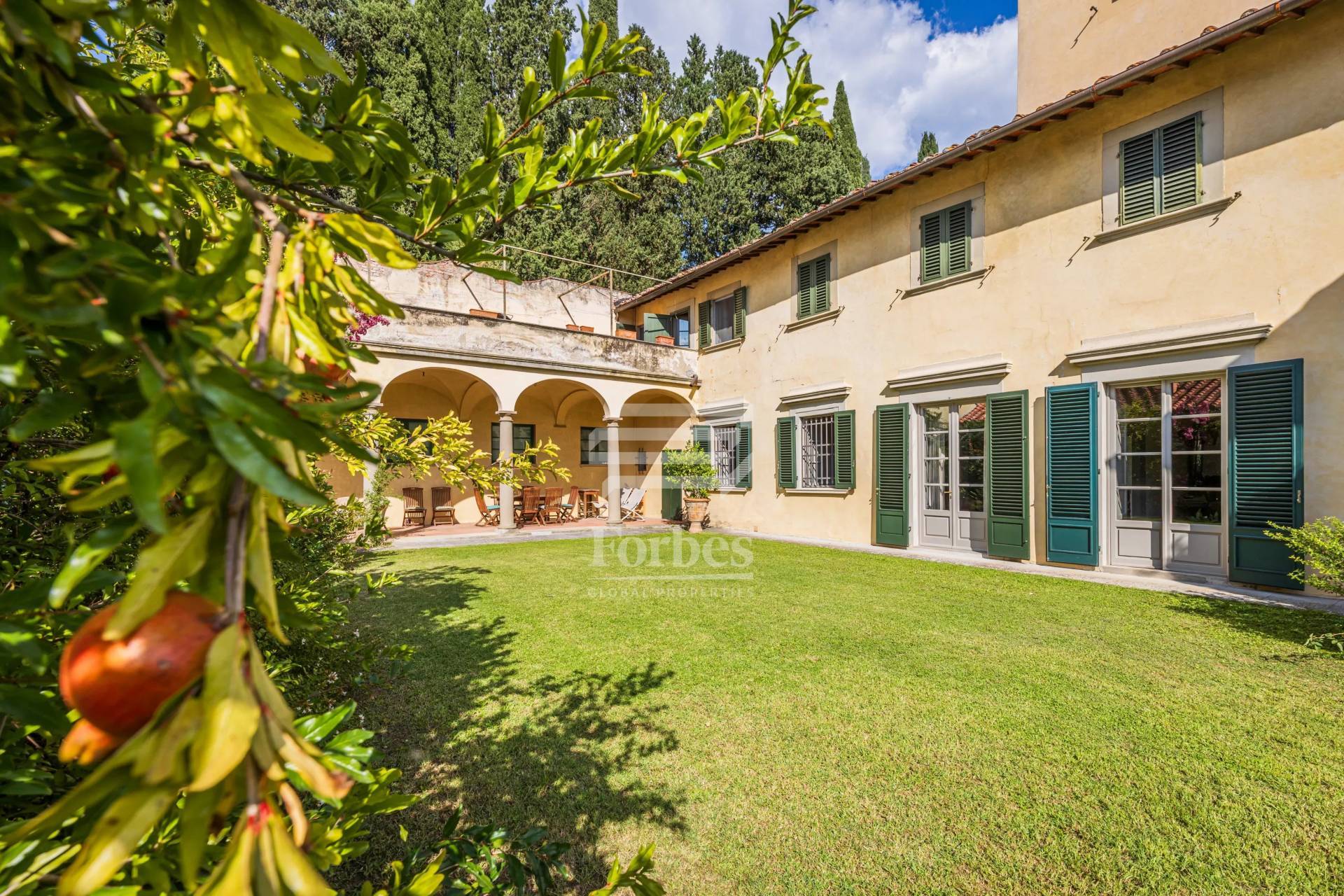
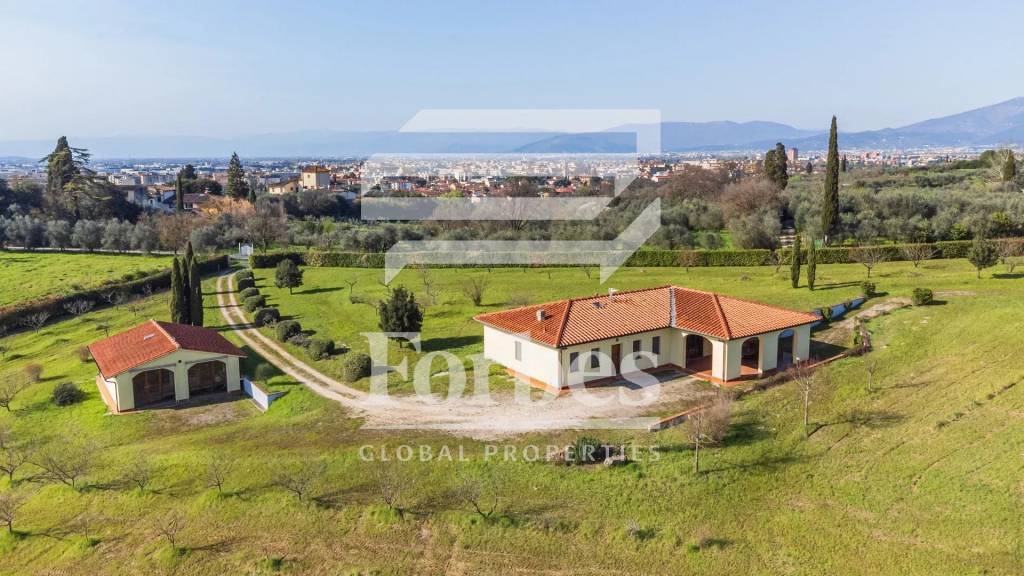
Immersed in a one-hectare fully fenced land surrounded by tall cypresses, the residence offers an oasis of peace and absolute privacy just minutes from the center of Florence. A driveway lined with centuries-old trees leads to a large private square in front of the main building.
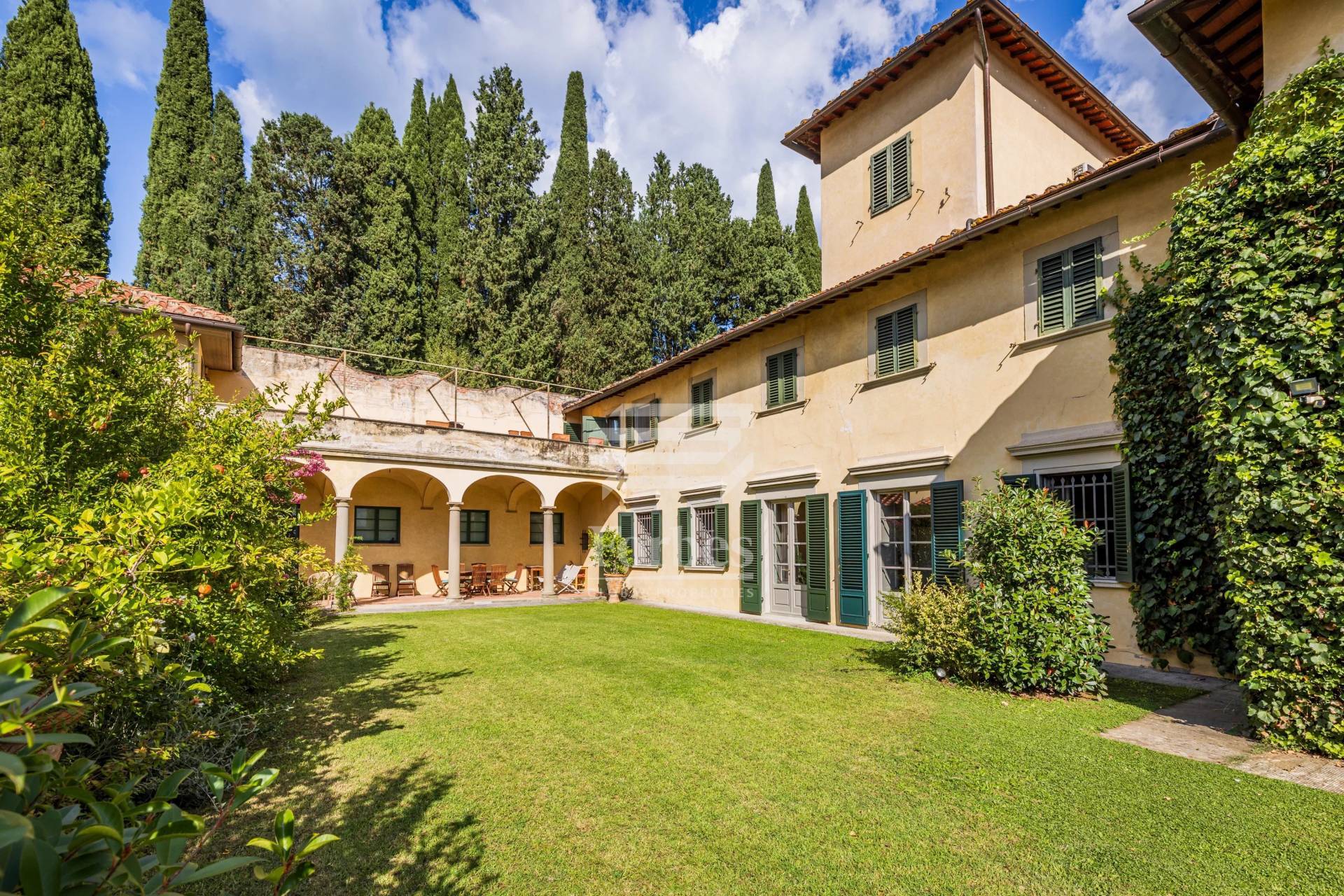
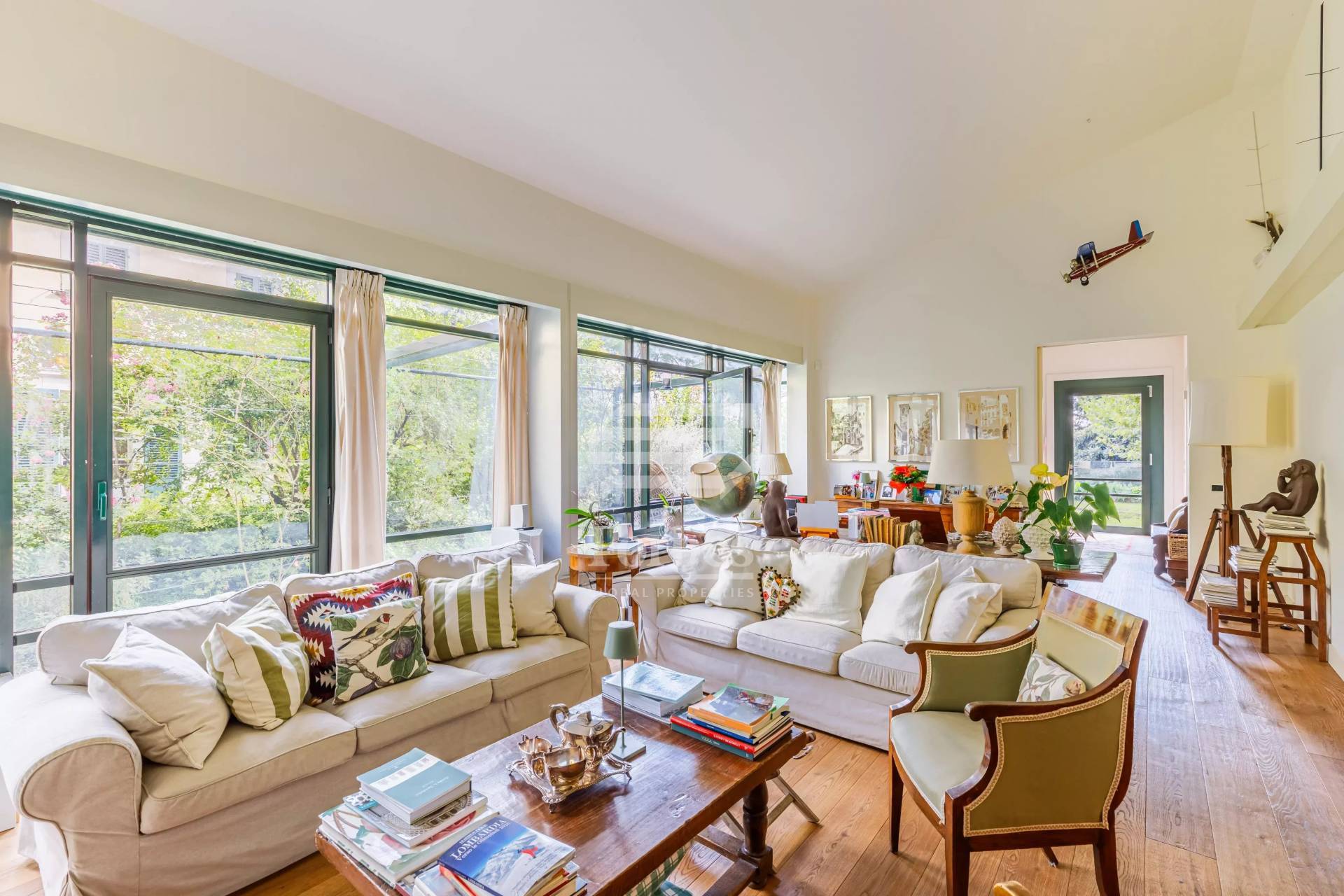
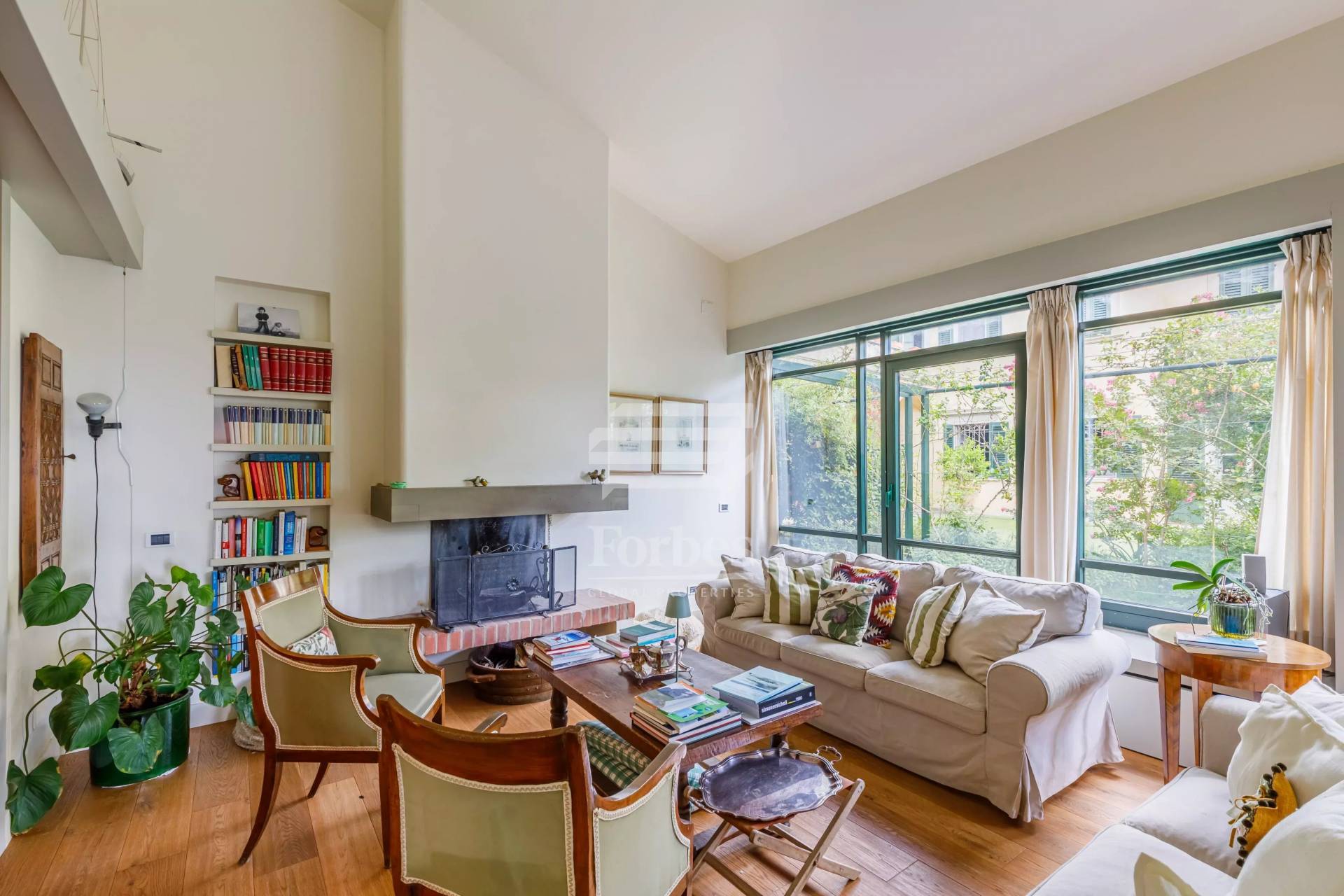
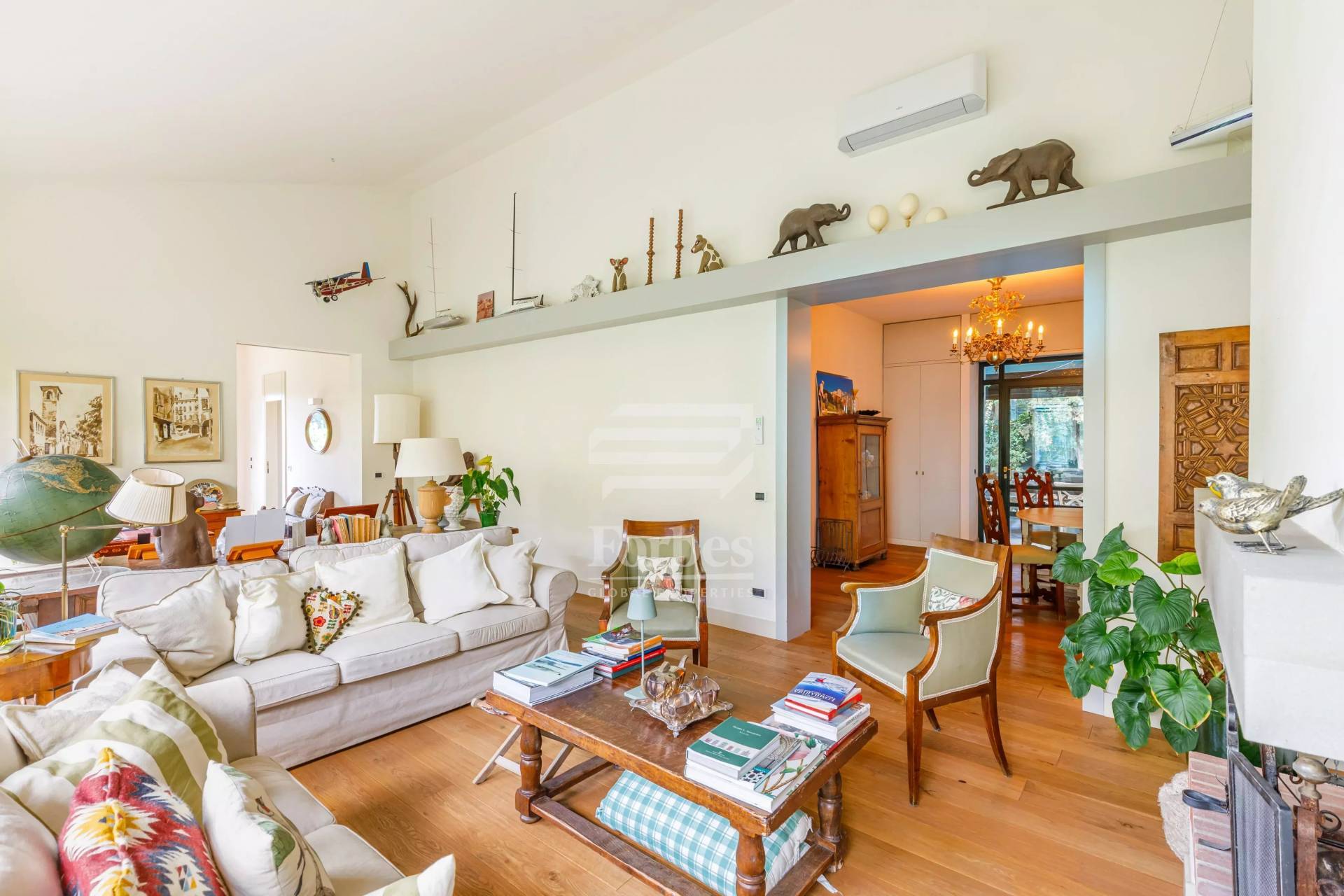
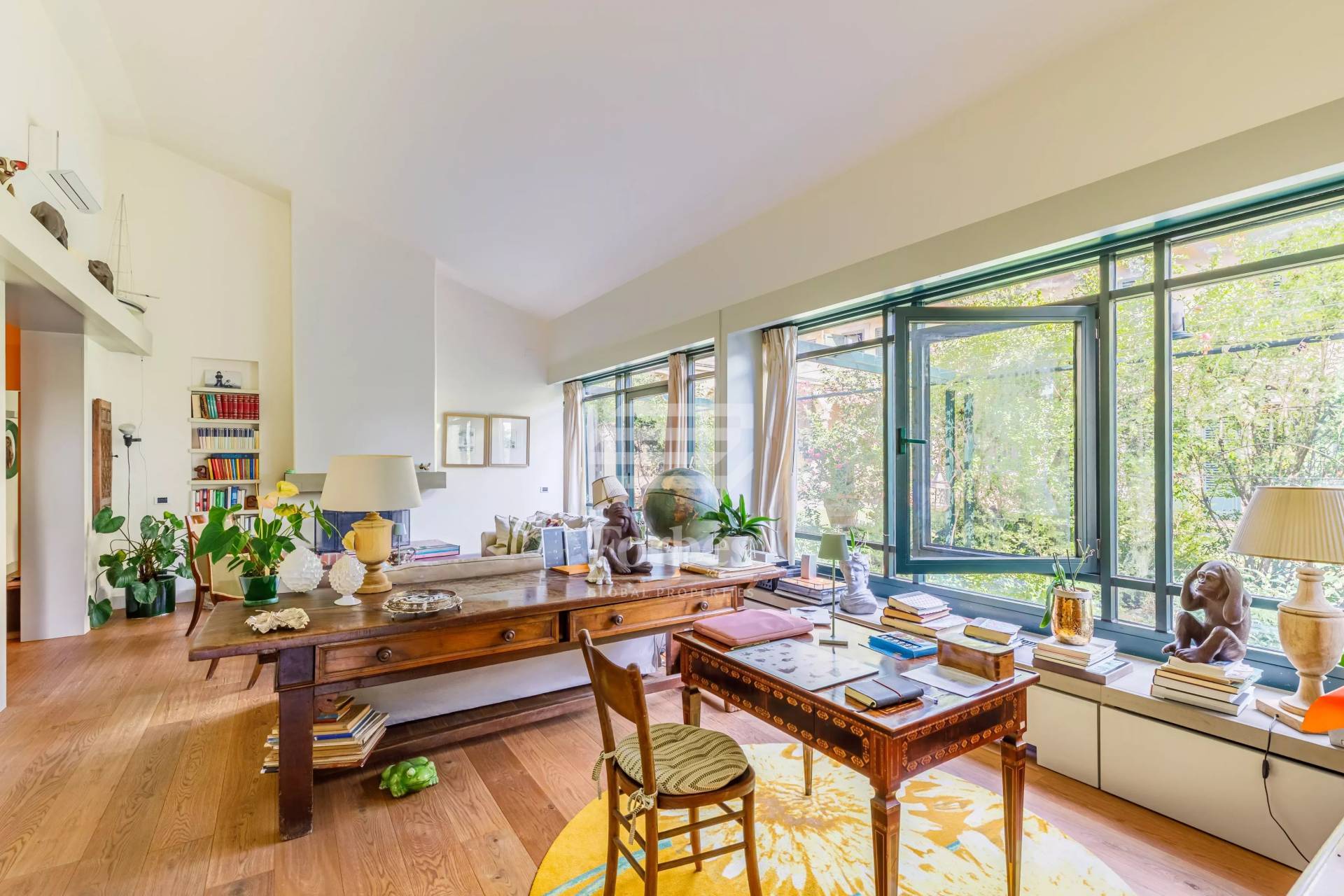
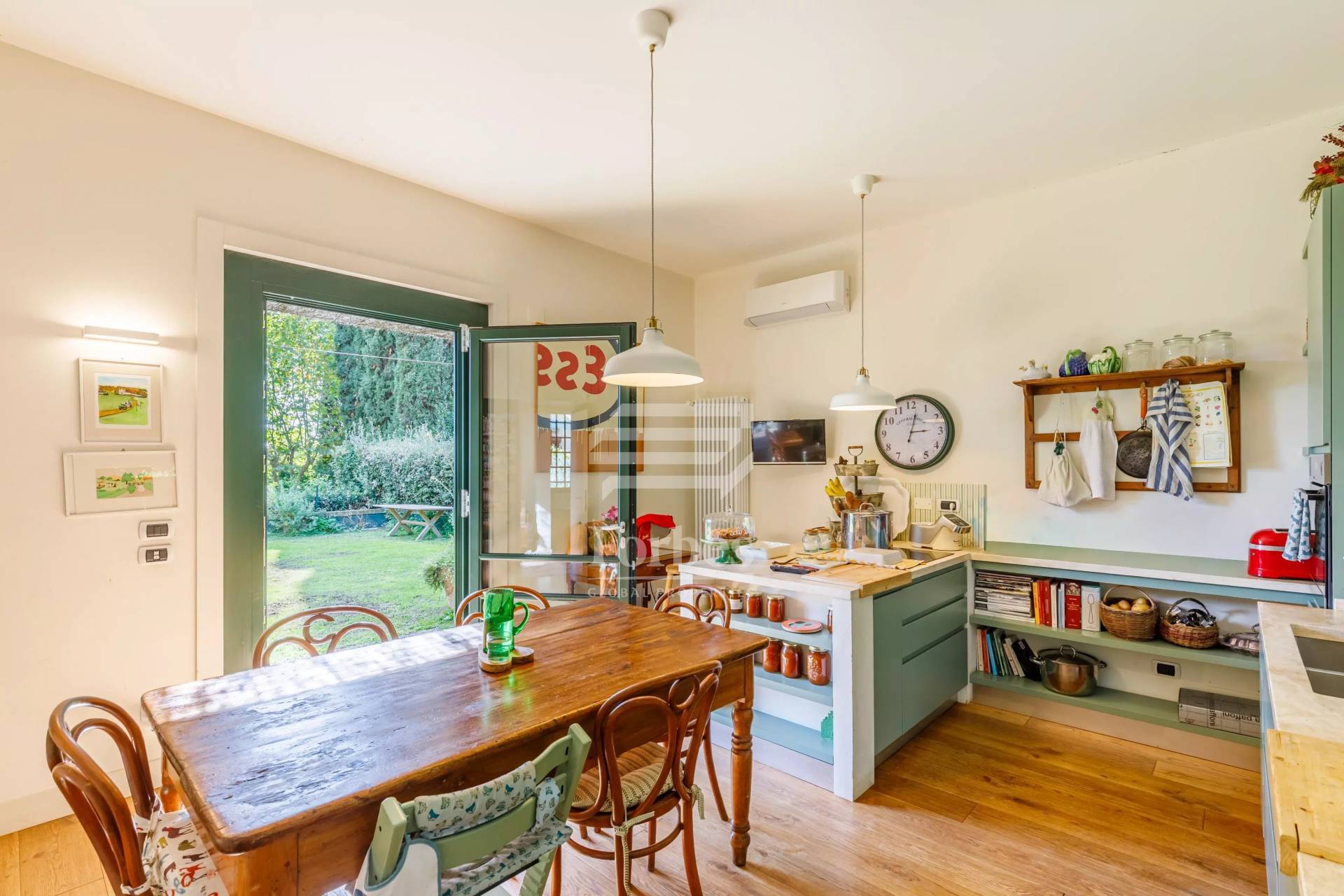
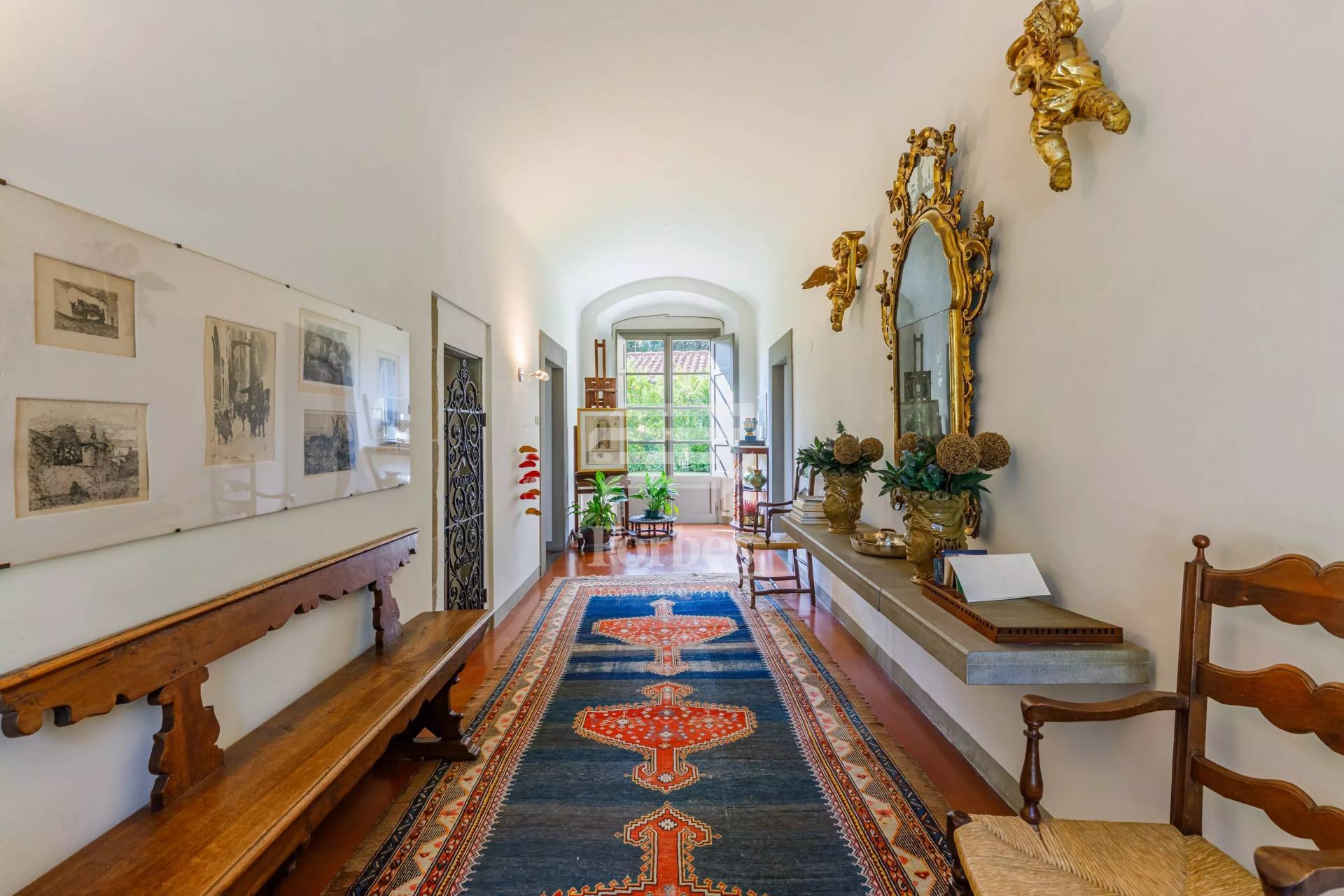
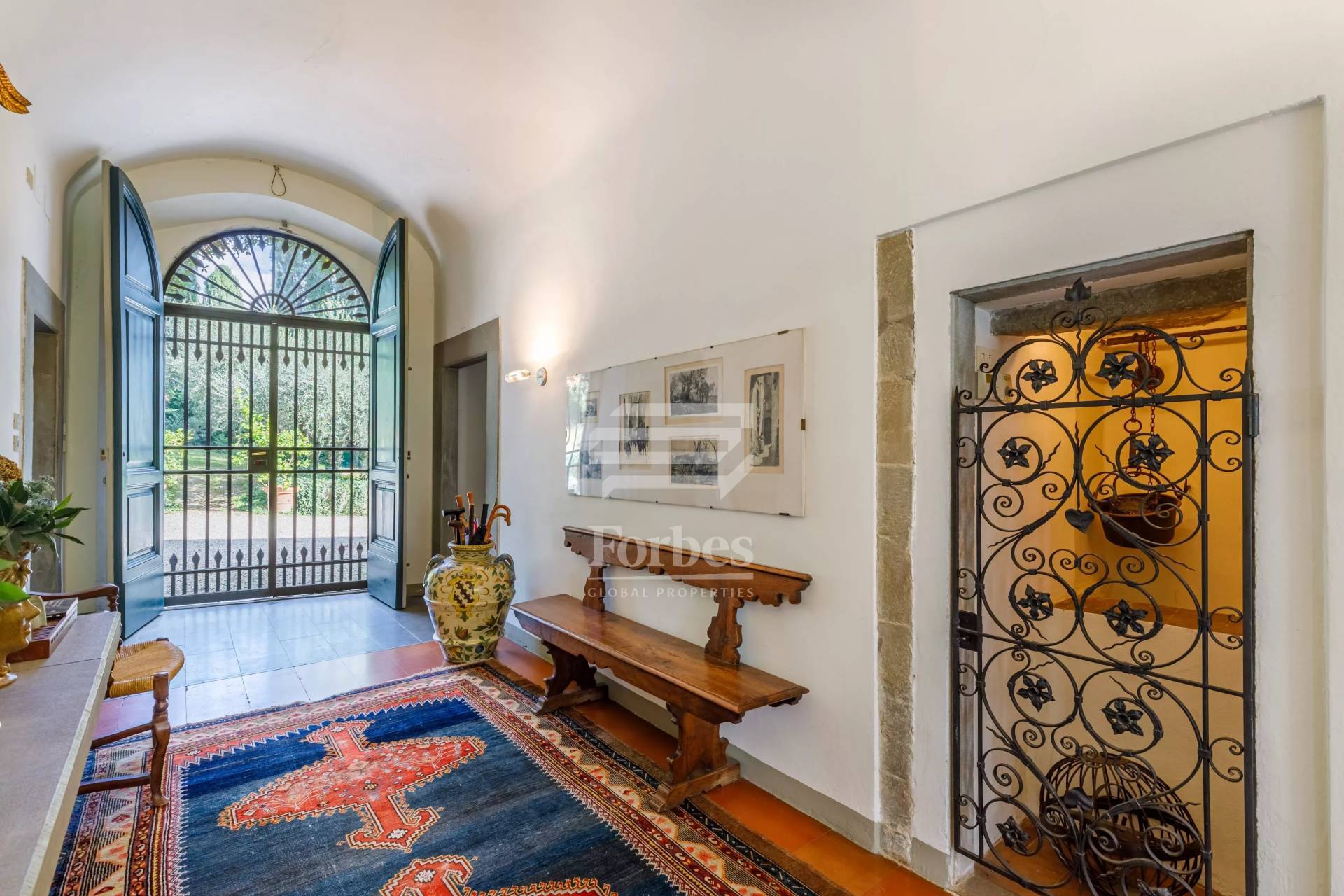
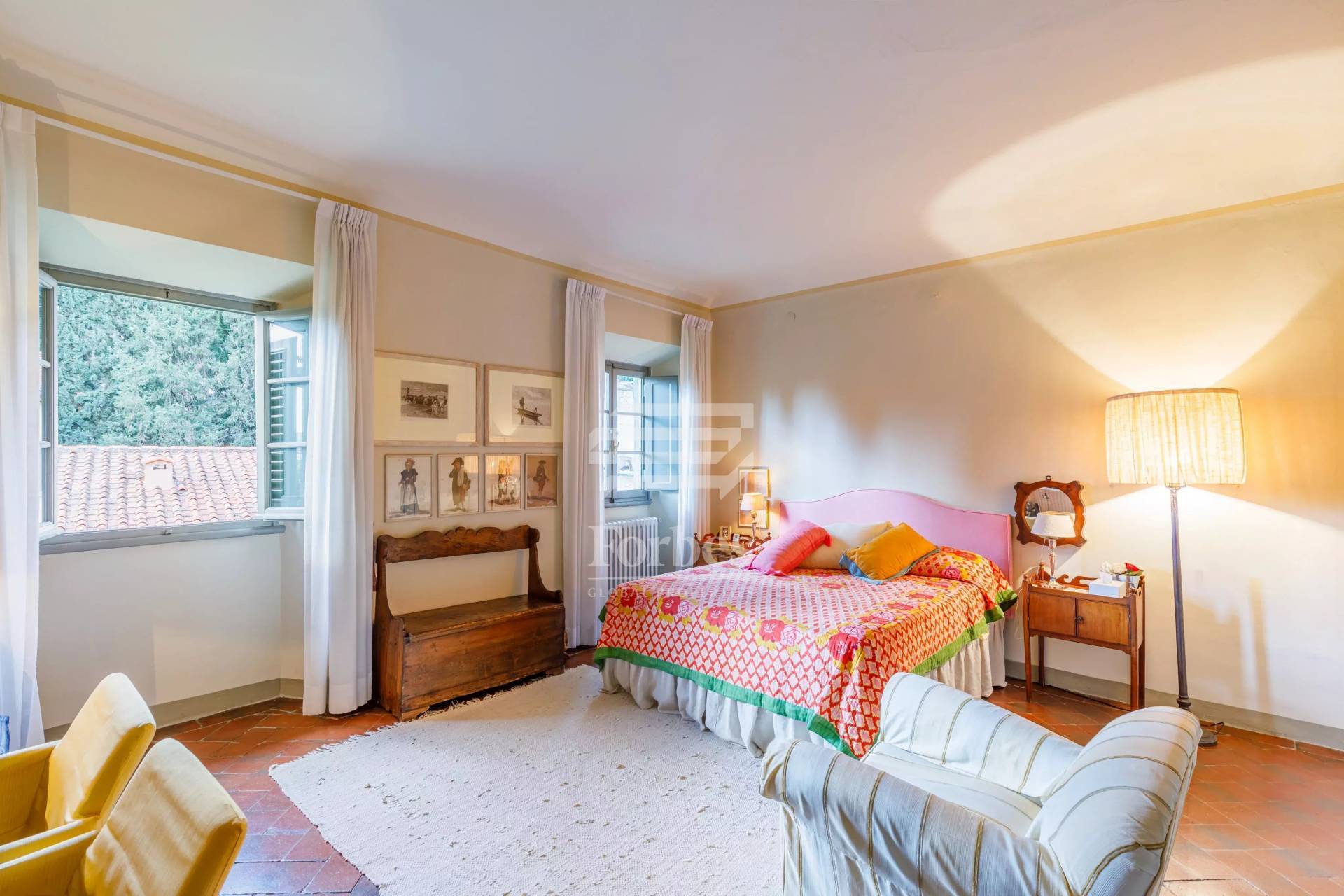
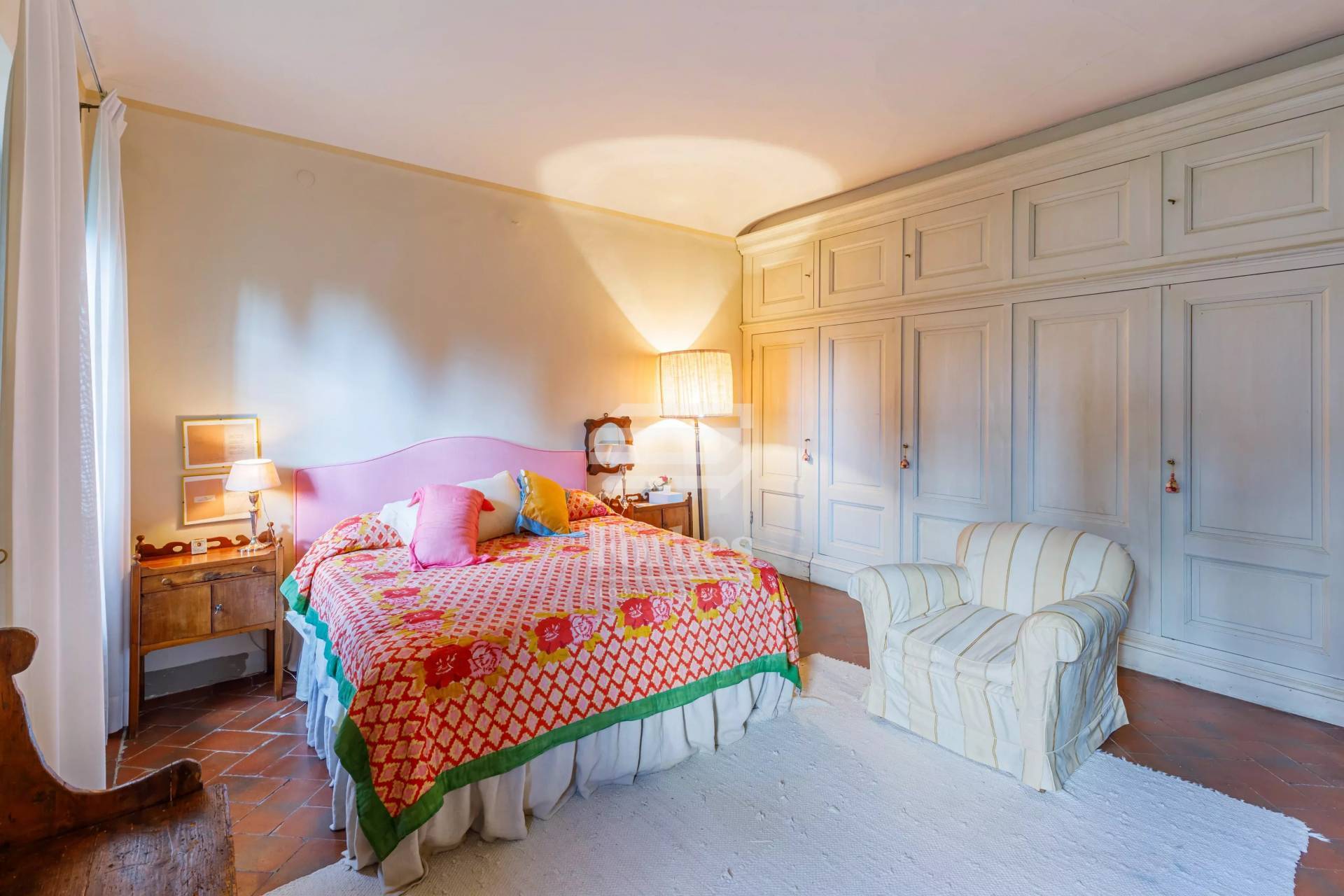
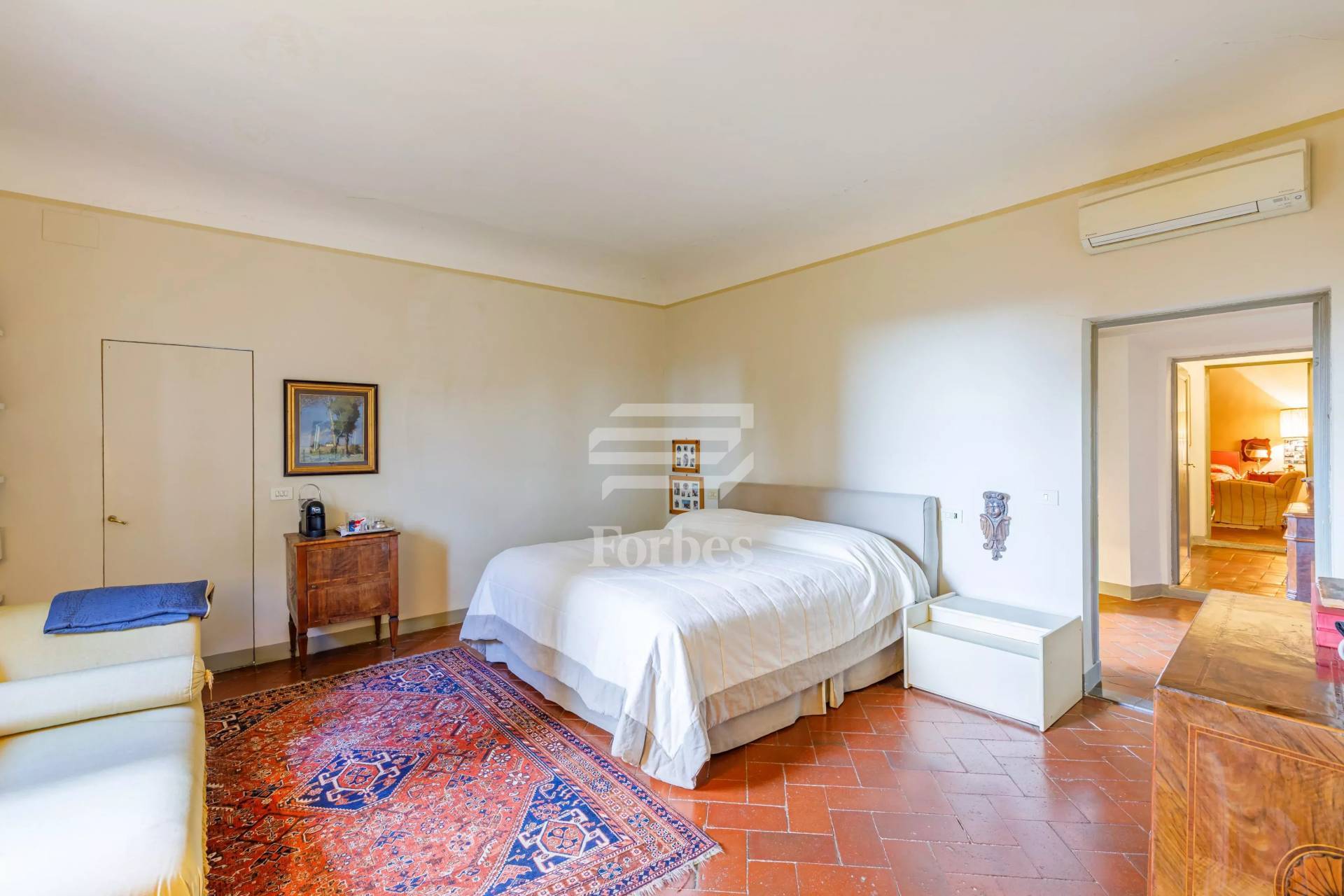
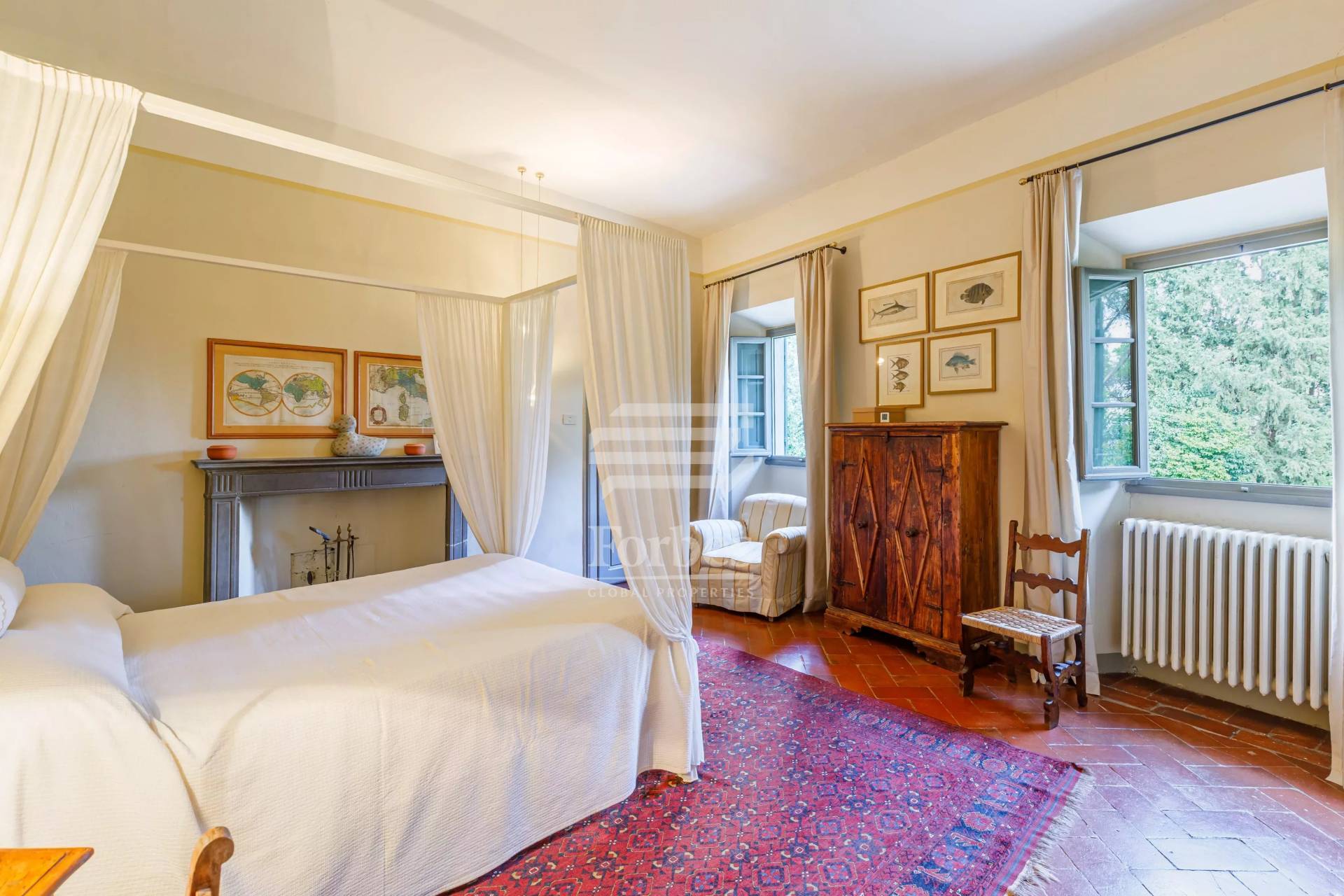
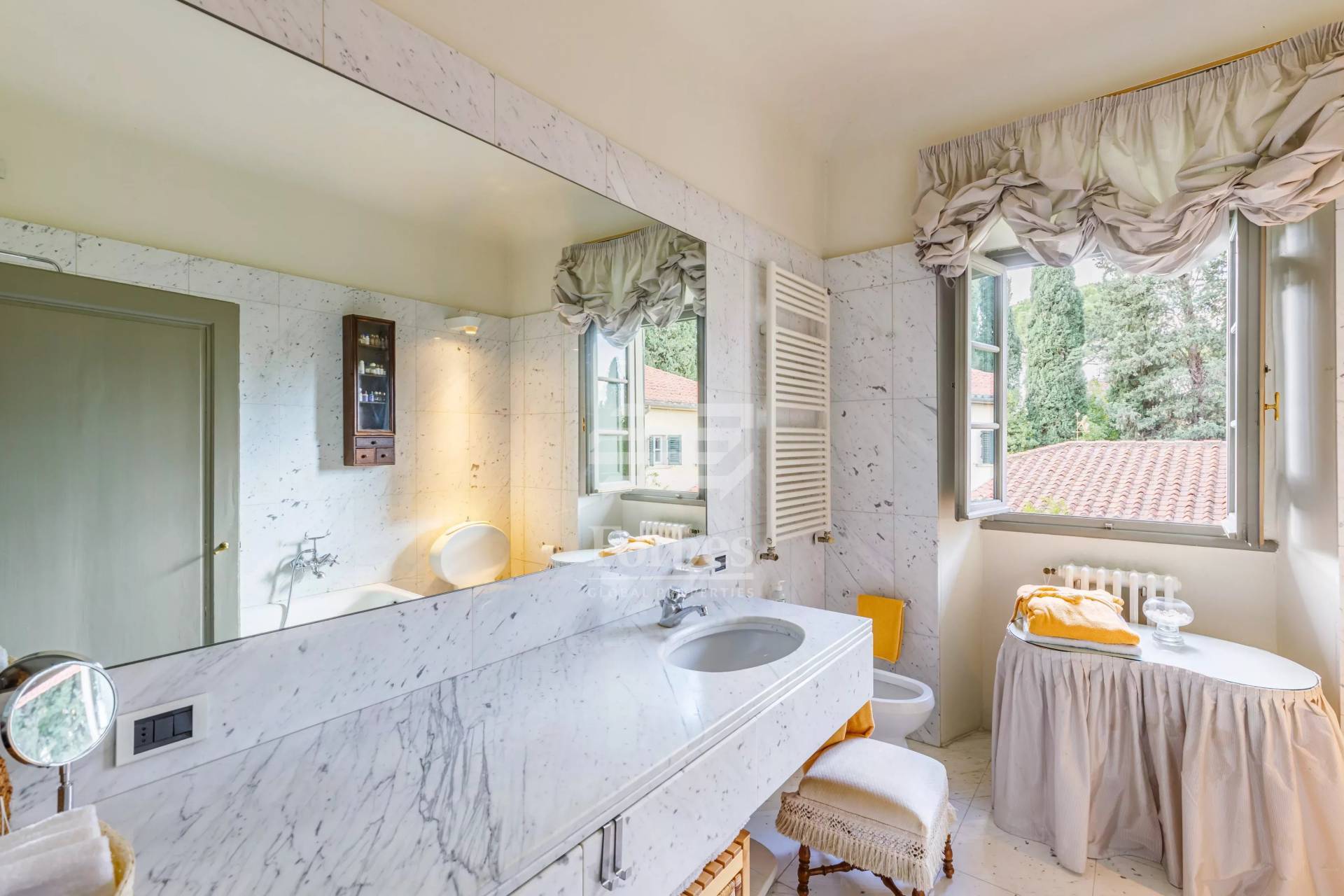
The imposing villa extends over approximately 800 sqm distributed over two floors, with 6 bedrooms, 5 bathrooms, and four timeless elegant living rooms. On the ground floor, an important "telescope" entrance ten meters long, where a fourteenth-century well is also located, introduces to the winter garden with its historic loggia, from which the lounges, TV room, dining room, study, kitchen, and laundry room branch out. On the upper floor, the master suite with private bathroom, dressing room, and study is adjacent to four other bedrooms, two bathrooms, and a magnificent terrace of over 30 sqm. The turret completes the layout with a bedroom, study, and bathroom with shower. In the basement, cellar and boiler room.
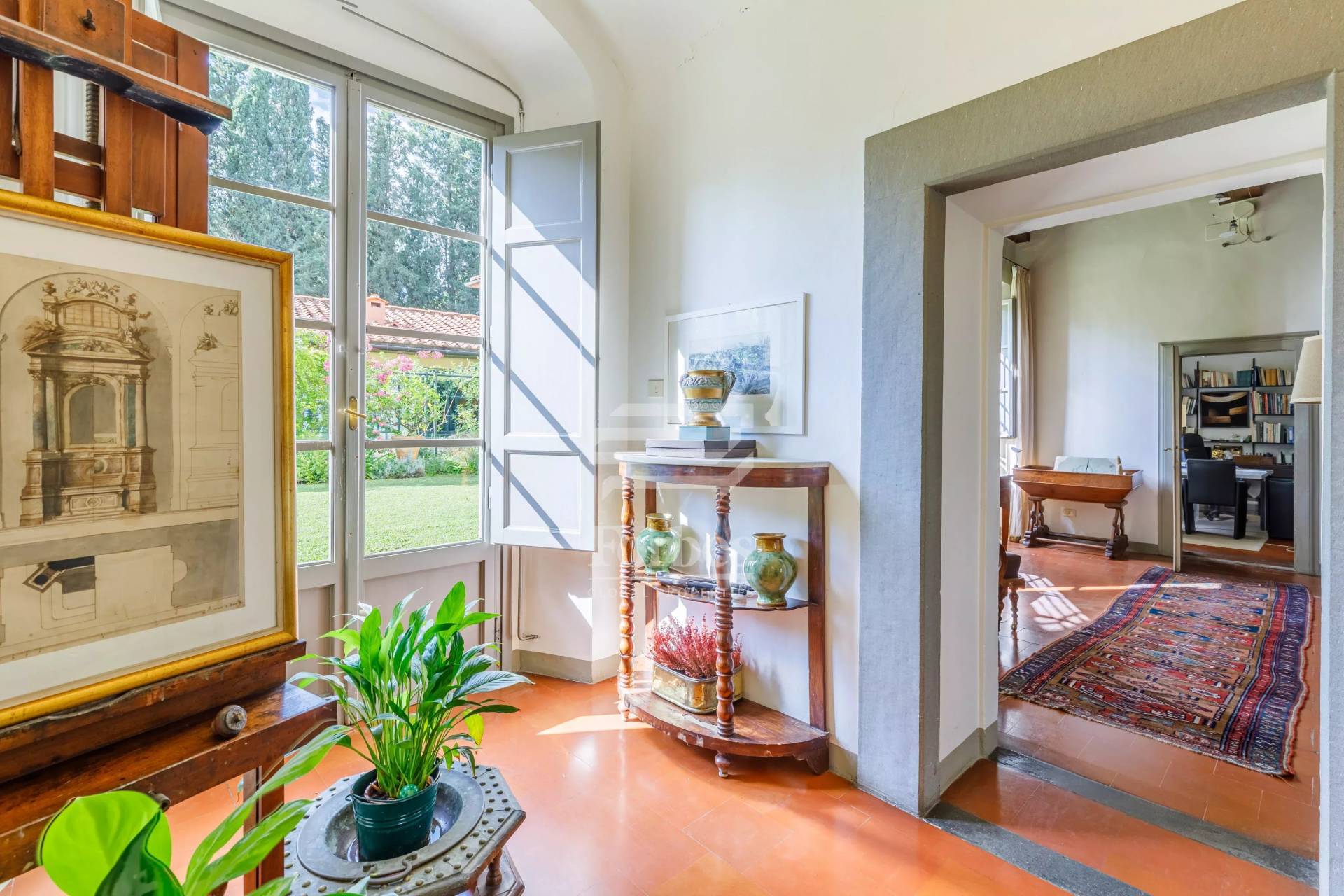
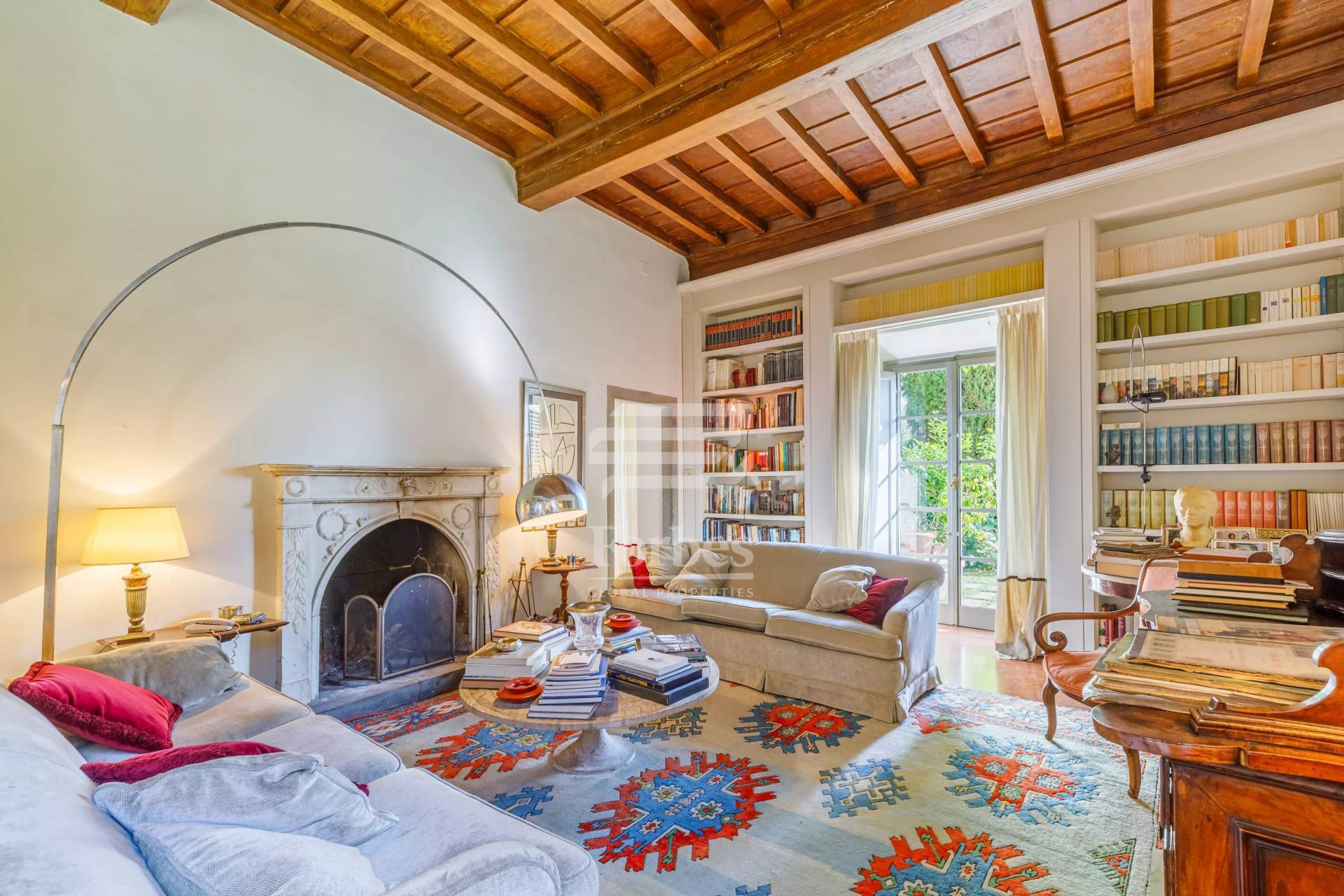
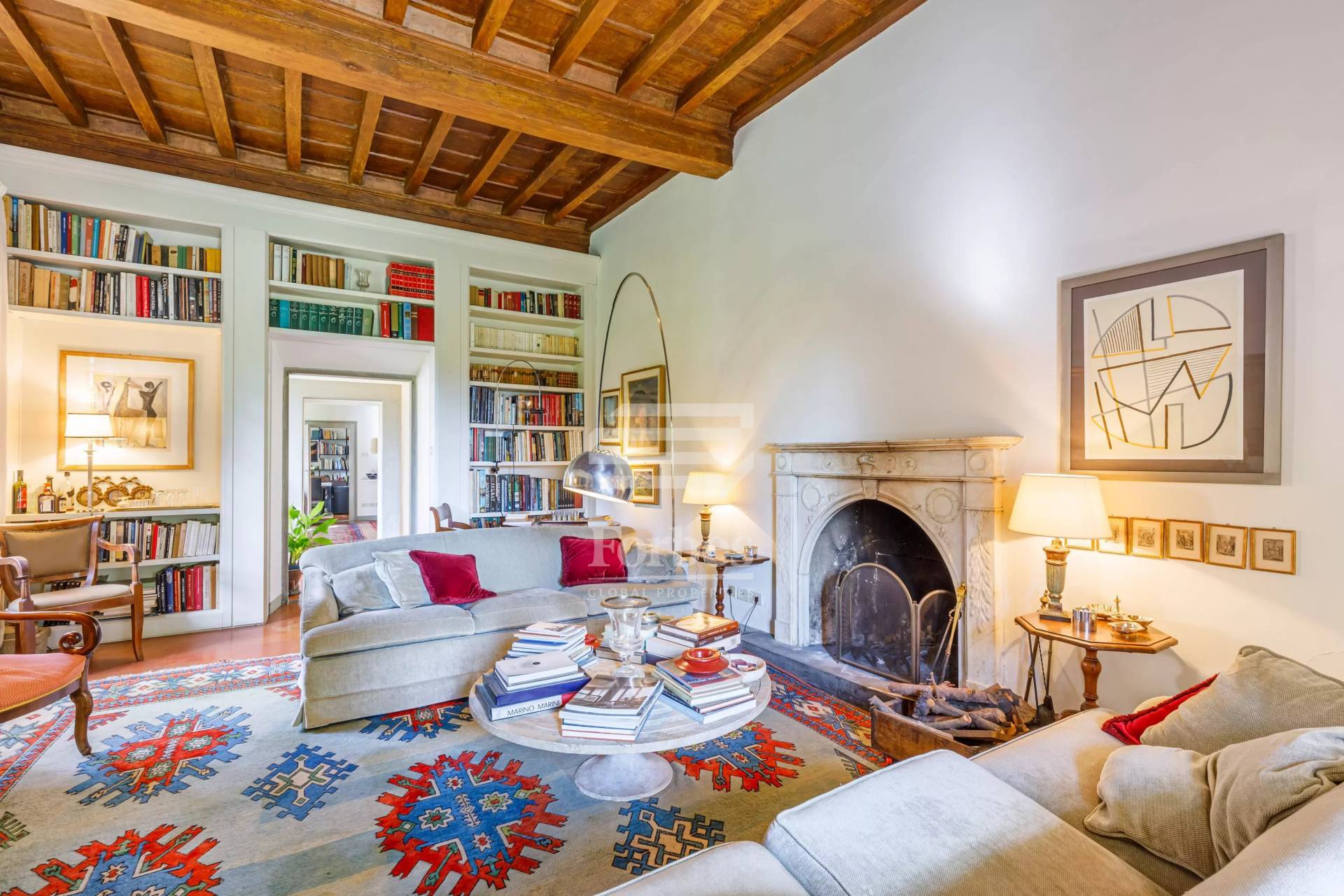
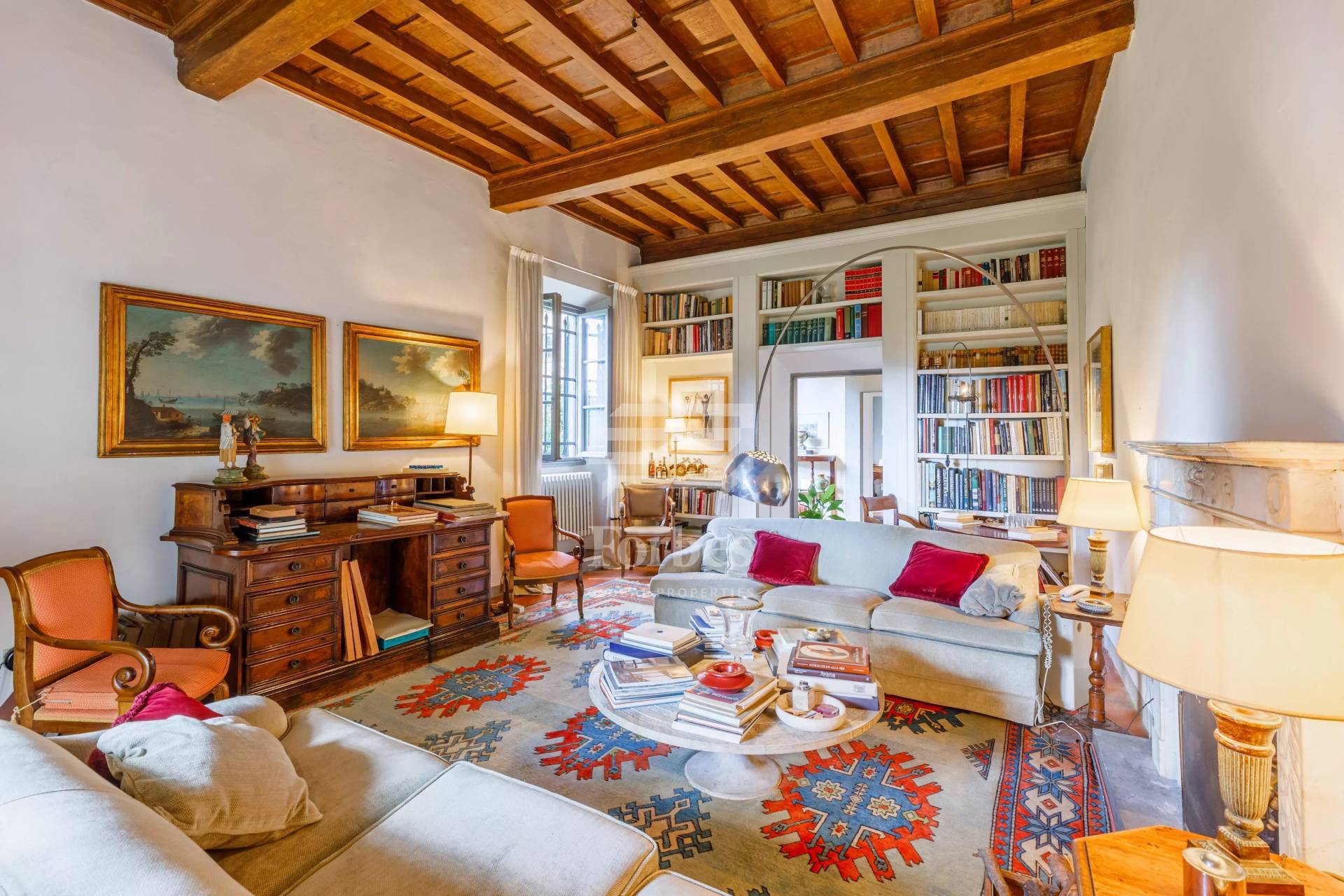
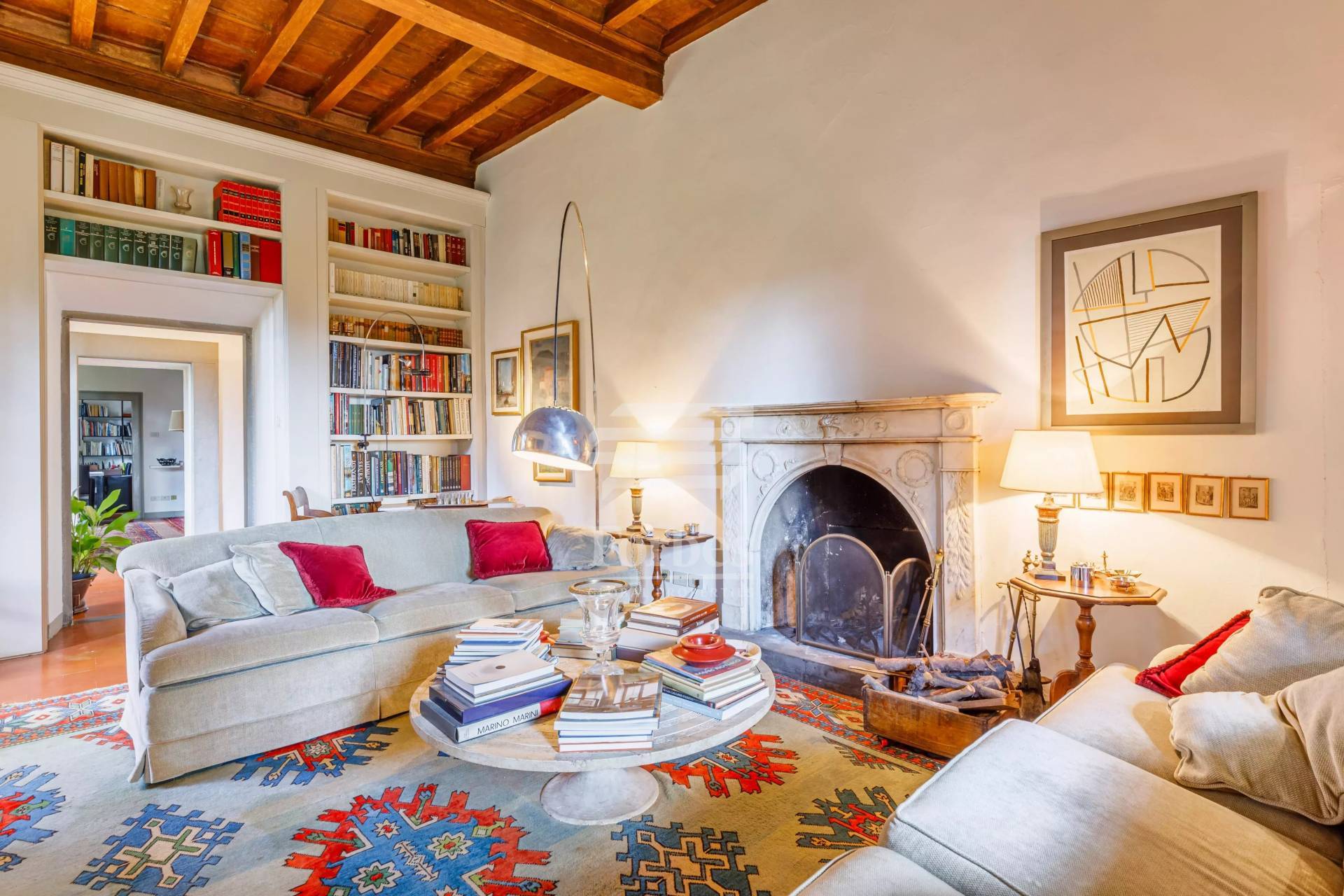
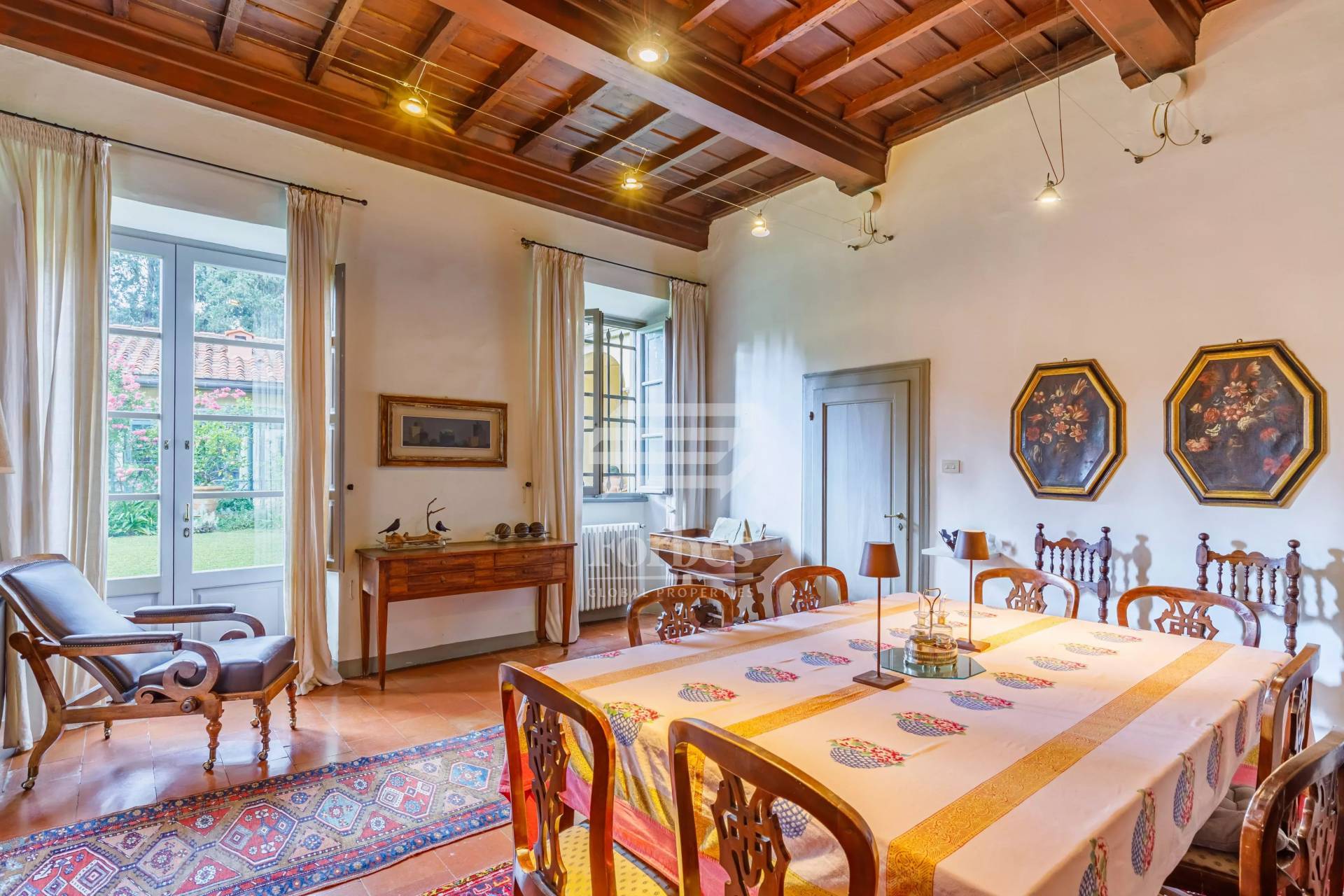
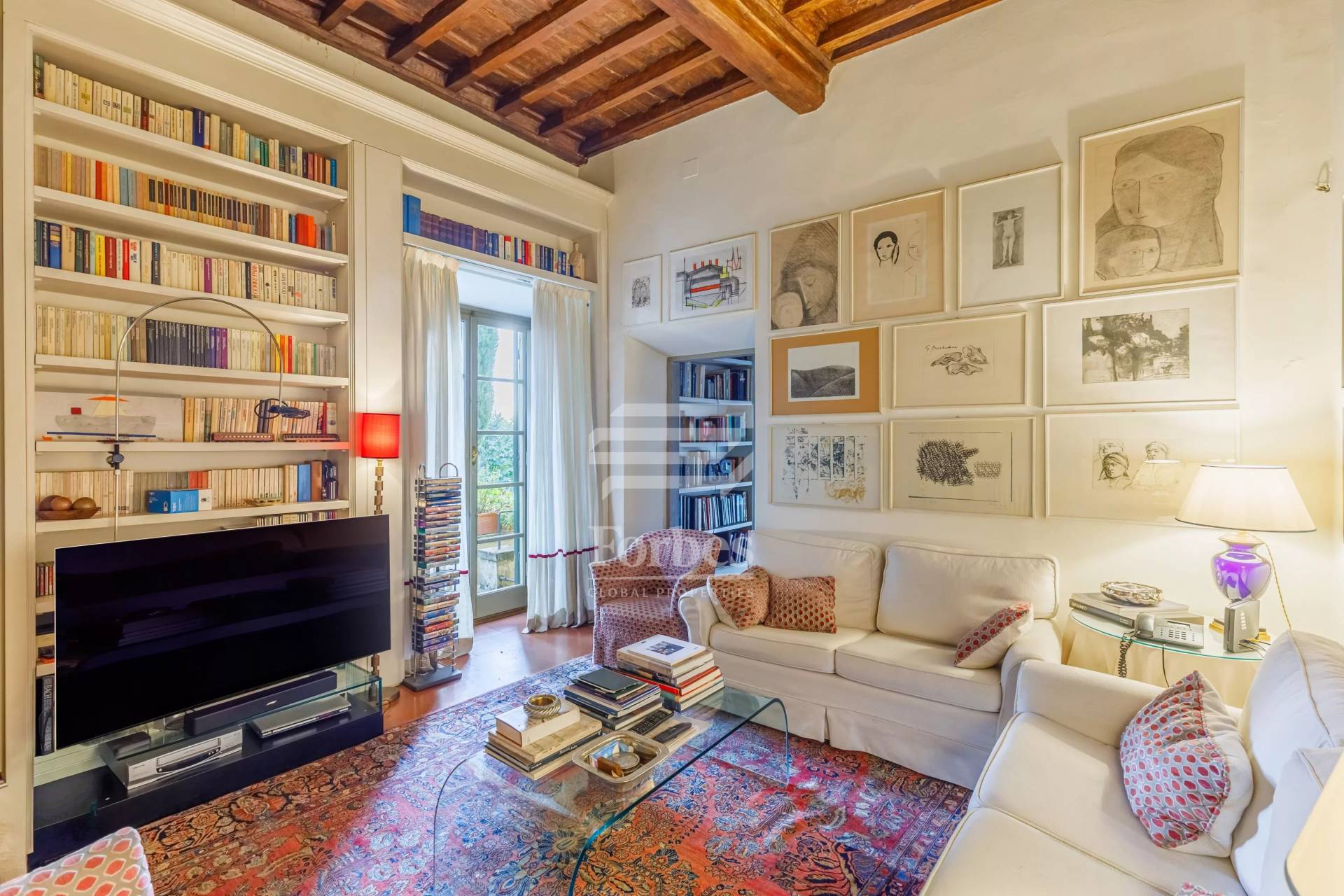
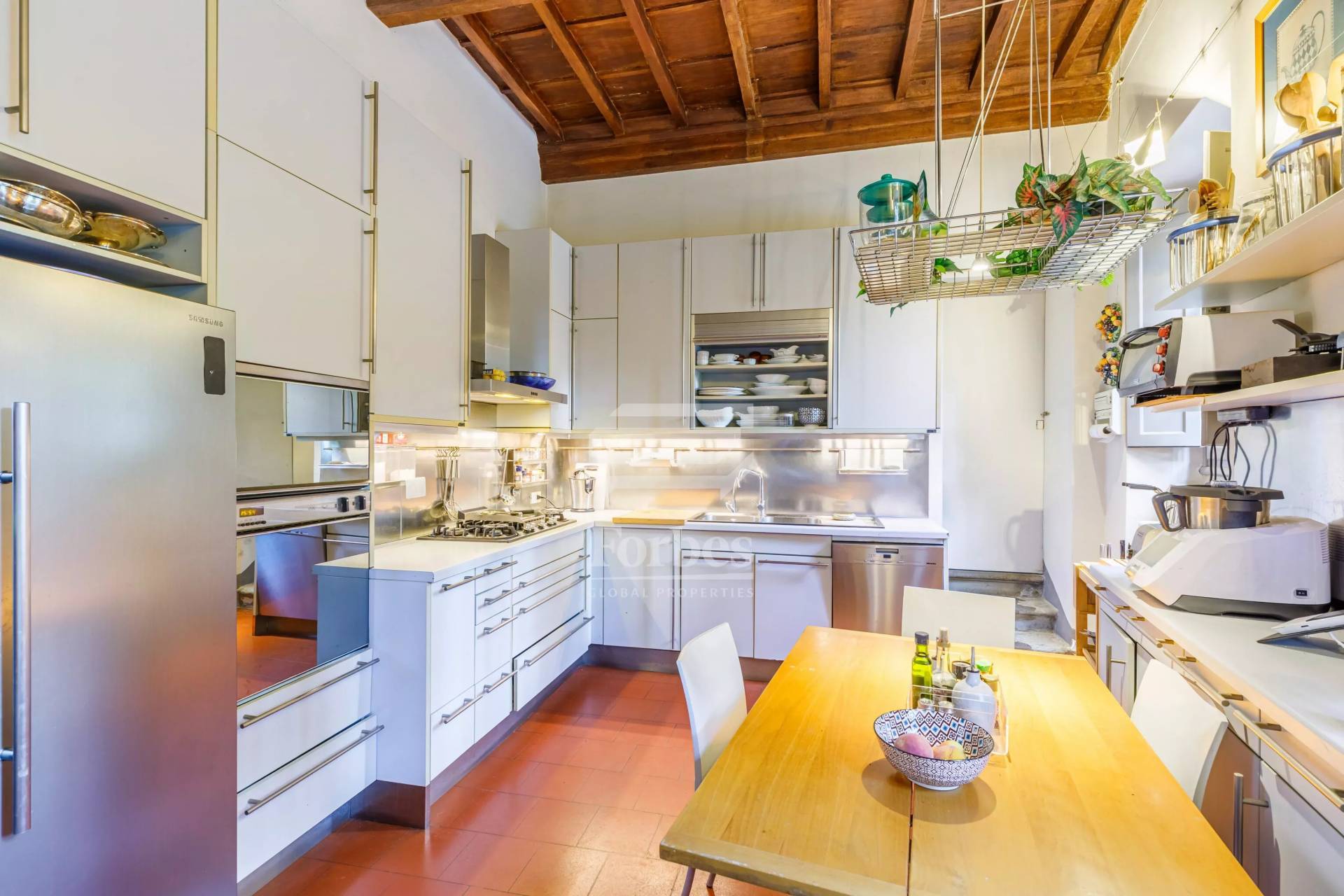
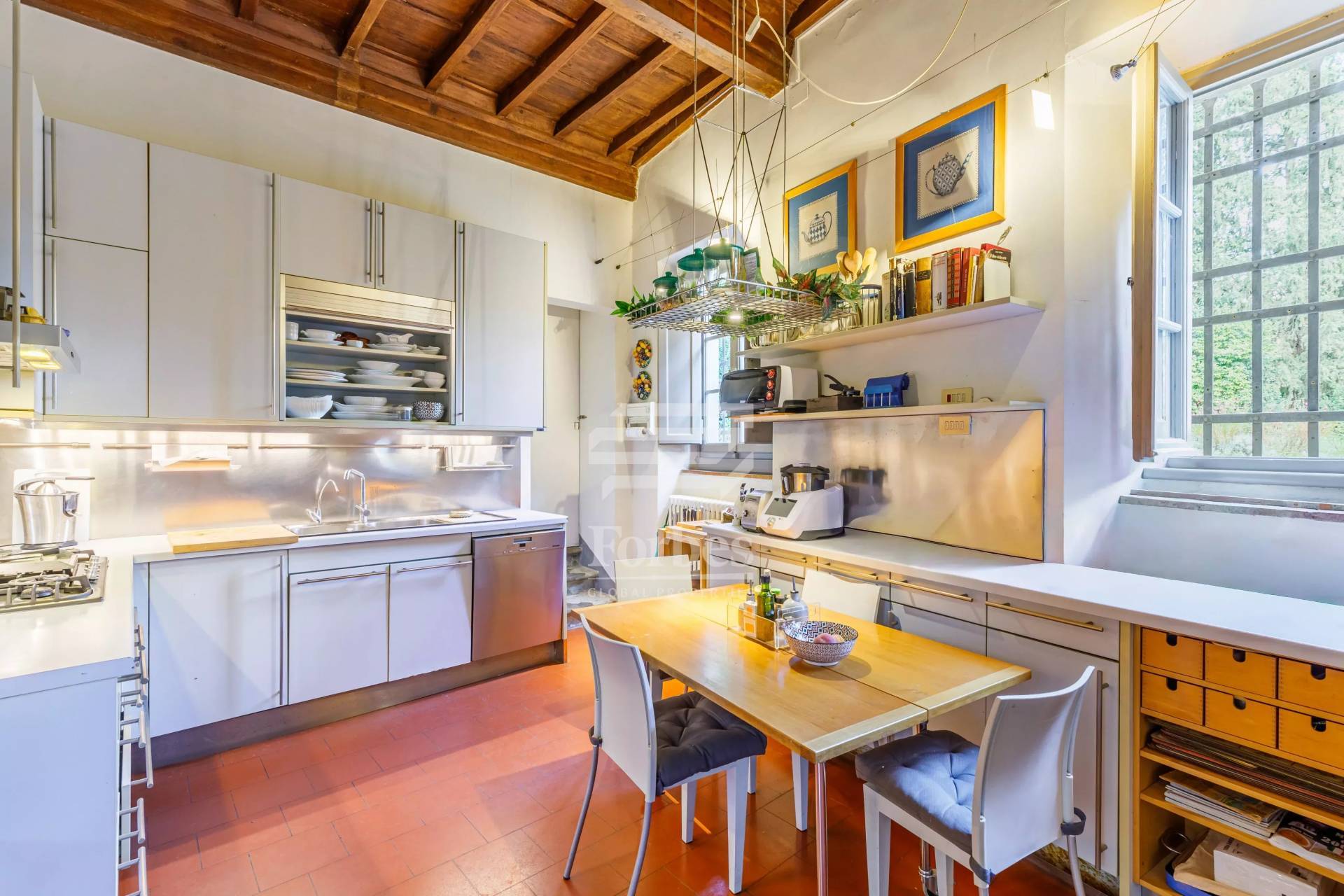
Original terracotta floors, coffered ceilings, and elegant fireplaces tell centuries of history without yielding a millimeter to time.
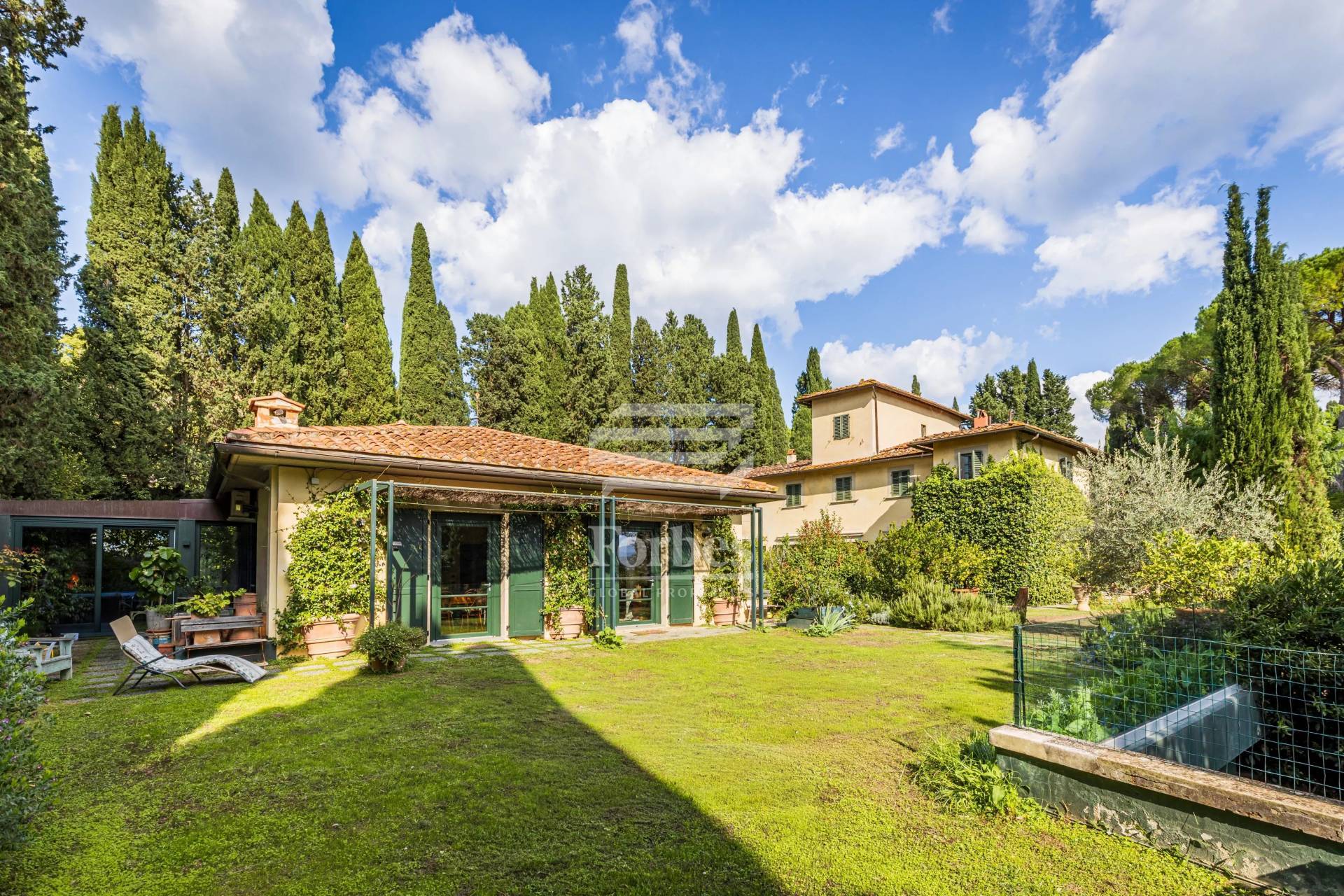
The lemon house of about 400 sqm — built in 1990 — offers an independent apartment spread over multiple levels: on the main floor, living room, dining room, kitchen, guest bathroom, and three bedrooms with en-suite bathrooms; an internal and external staircase leads to an open-plan living area with kitchenette and mezzanine; the elevator provides access to the basement, with two large rooms, bathroom, and a closed garage of about 100 sqm.
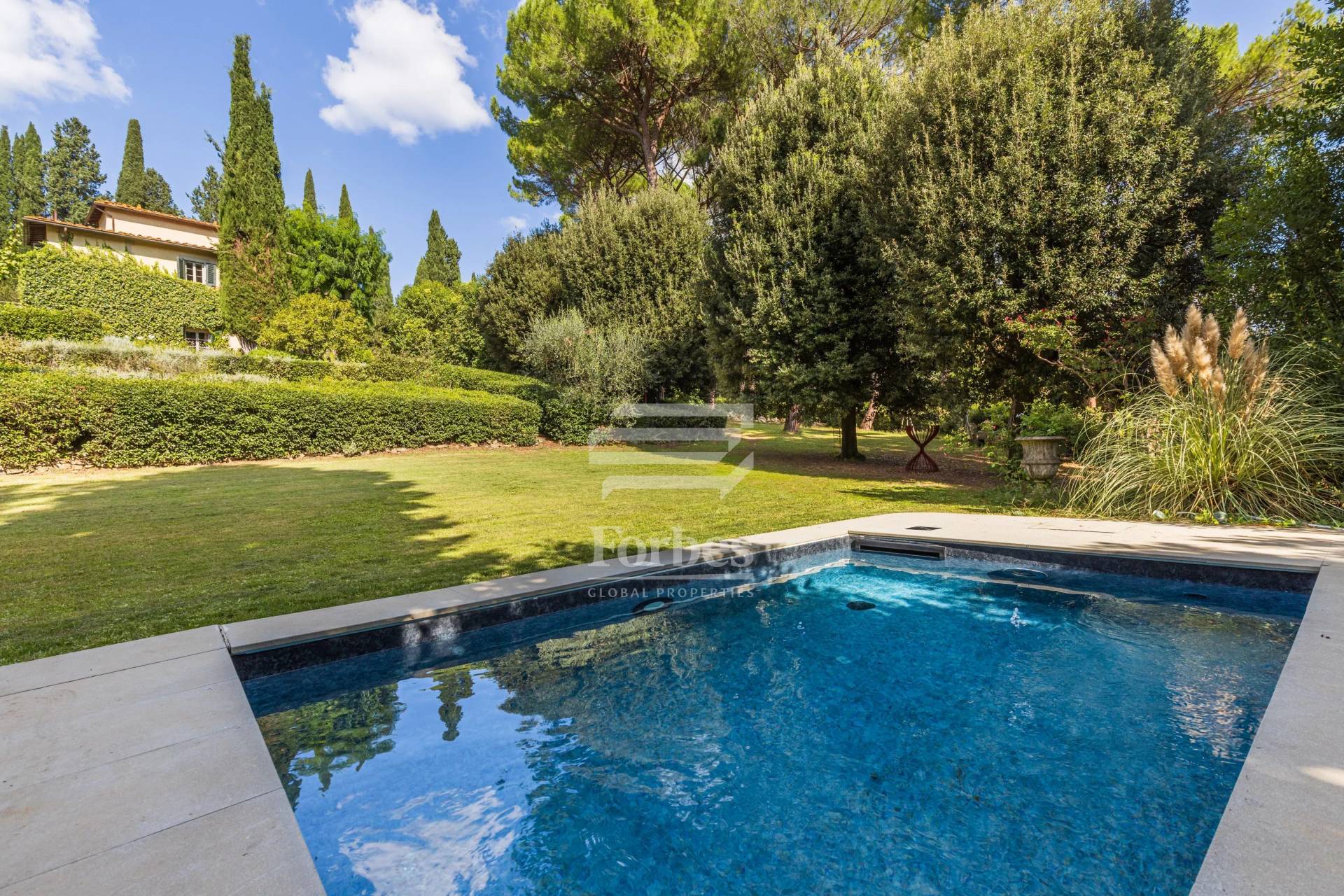
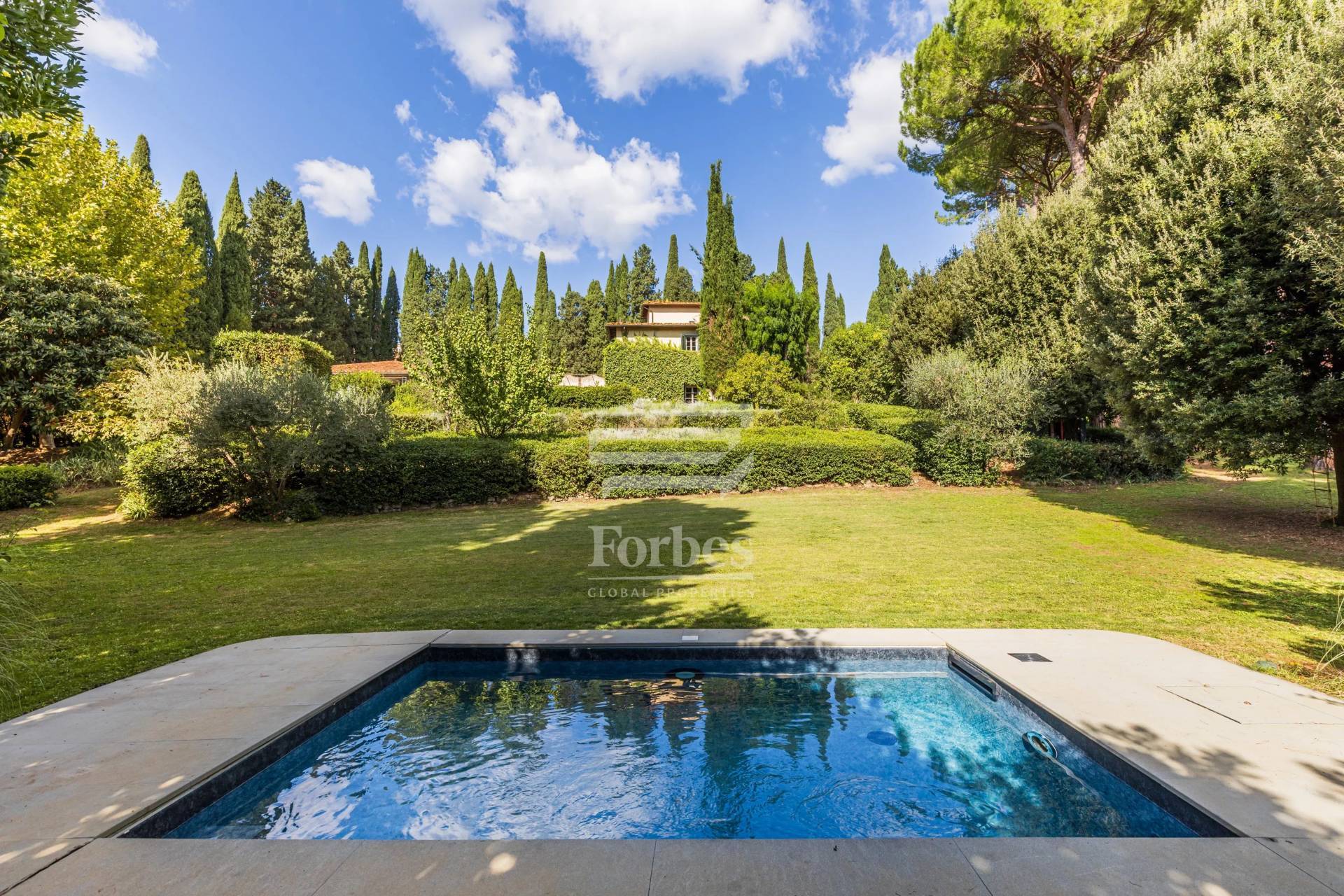
The garden, maintained in its lush simplicity, unites and at the same time makes the two properties independent through lawns and tree-lined paths. In a secluded area, the swimming pool carved from the ancient ornamental basin offers a corner of tranquility immersed in nature.
A residence that is not just bought. It is inherited.




































A Residence in the History of Florence
In the heart of Ponte a Mensola, between the municipalities of Florence and Fiesole, stands an enchanting typically Tuscan residence in the Florentine real estate scene, a fourteenth-century villa that has traversed centuries of history, hosting internationally prominent personalities and preserving its most authentic soul.
Cited in the volume The Villas of Florence by Giulio Lensi Orlandi, the property gained particular notoriety in the nineteenth century when it was purchased by British spouses Henry James and Janet Ross, promoters of Anglo-Saxon cultural life in Florence, founders of the British Institute, and distinguished visitors of Bernard Berenson — the famous art critic who gathered the European intellectual elite at Villa I Tatti nearby, now the Harvard University headquarters. Neighbors of Temple Leader, the English aristocrat who restored Vincigliata Castle, the Rosses transformed this property into a vibrant center of the British community, cultivating oil and wine on a vast estate extending from Poggio Gherardo to Via D'Annunzio.
After World War II, Lord Acton bought the villa for his daughter, whose husband, an architect, carried out a restoration that revealed ancient walls, windows with Tuscan wooden shutters framed by pietra serena, coffered ceilings, and expanded the loggia in the form we can still admire today. In the 1990s, architect Guido L. Spadolini, husband of the current owner, completed the complex with the construction of a lemon house, inserted into the garden with refined architectural sensitivity.
The property today
Immersed in a one-hectare fully fenced land surrounded by tall cypresses, the residence offers an oasis of peace and absolute privacy just minutes from the center of Florence. A driveway lined with centuries-old trees leads to a large private square in front of the main building.
The imposing villa extends over approximately 800 sqm distributed over two floors, with 6 bedrooms, 5 bathrooms, and four timeless elegant living rooms. On the ground floor, an important "telescope" entrance ten meters long, where a fourteenth-century well is also located, introduces to the winter garden with its historic loggia, from which the lounges, TV room, dining room, study, kitchen, and laundry room branch out. On the upper floor, the master suite with private bathroom, dressing room, and study is adjacent to four other bedrooms, two bathrooms, and a magnificent terrace of over 30 sqm. The turret completes the layout with a bedroom, study, and bathroom with shower. In the basement, cellar and boiler room.
Original terracotta floors, coffered ceilings, and elegant fireplaces tell centuries of history without yielding a millimeter to time.
The lemon house of about 400 sqm — built in 1990 — offers an independent apartment spread over multiple levels: on the main floor, living room, dining room, kitchen, guest bathroom, and three bedrooms with en-suite bathrooms; an internal and external staircase leads to an open-plan living area with kitchenette and mezzanine; the elevator provides access to the basement, with two large rooms, bathroom, and a closed garage of about 100 sqm.
The garden, maintained in its lush simplicity, unites and at the same time makes the two properties independent through lawns and tree-lined paths. In a secluded area, the swimming pool carved from the ancient ornamental basin offers a corner of tranquility immersed in nature.
A residence that is not just bought. It is inherited.